
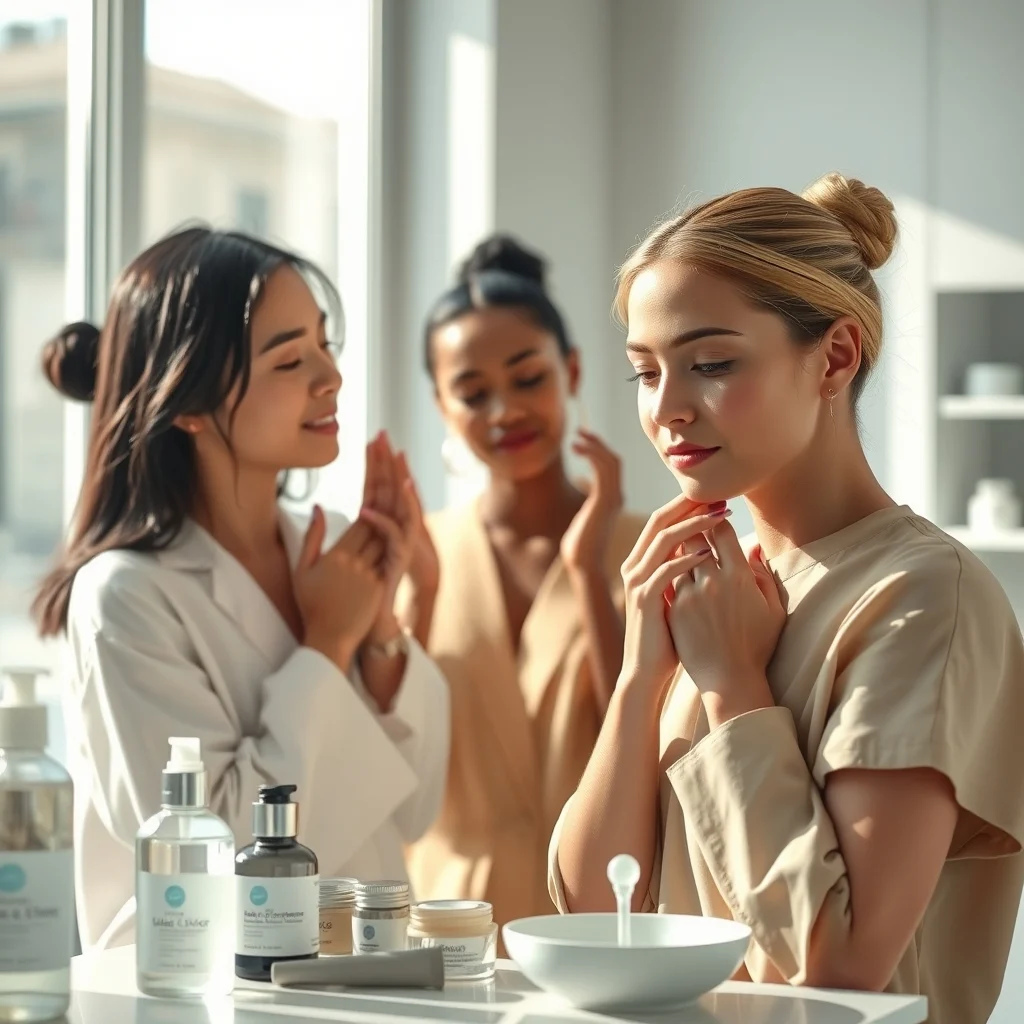
Since 2018, the global skincare market has witnessed a 34% annual growth in demand for products aligned with K-beauty’s preventive and holistic principles, according to a 2023 report by Euromonitor International. This shift reflects a broader consumer pivot toward long-term complexion health, driven by dermatological research, cultural rituals, and a rejection of reactive, quick-fix solutions. The movement is not confined to South Korea; it has gained traction in the U.S., Europe, and Southeast Asia, where consumers increasingly prioritize skin resilience, hydration, and barrier integrity over immediate cosmetic results. The trend is particularly pronounced among millennials and Gen Z, who account for 62% of preventive skincare purchases, per a 2024 study by McKinsey & Company. The adoption of these practices is not merely a commercial phenomenon but a response to rising rates of sensitive skin, environmental stressors, and the limitations of conventional dermatological treatments.
The Scope and Stakeholders of K-Beauty’s Preventive Framework
K-beauty’s long-term complexion health philosophy is rooted in a tripartite foundation: preventive care, holistic nourishment, and mindful rituals. Unlike Western skincare models, which often emphasize corrective treatments, K-beauty’s approach is proactive, focusing on maintaining skin health before issues arise. This framework emerged in the early 2000s as South Korean dermatologists and beauty researchers began integrating traditional herbal medicine with modern biotechnology. Key stakeholders include multinational conglomerates like Amorepacific and LG Household & Health Care, independent K-beauty brands such as Dr. Jart+ and COSRX, and a network of dermatologists, aestheticians, and consumers who act as both advocates and critics. The philosophy has also been shaped by regulatory bodies like the Korean Ministry of Food and Drug Safety (MFDS), which enforces stringent efficacy and safety standards for skincare products.
Historical Evolution: From Traditional Remedies to Modern Biotechnology
The origins of K-beauty’s preventive skincare philosophy can be traced to Korea’s Joseon Dynasty (1392–1897), where herbal remedies and fermented ingredients were used to maintain skin health. However, the modern iteration of this approach began in the 1980s, when South Korea’s rapid industrialization led to increased pollution and skin sensitivity. The timeline below outlines key milestones in the evolution of K-beauty’s long-term complexion health paradigm:
- 1980s: Introduction of the first K-beauty products incorporating traditional ingredients like ginseng and green tea, marketed for their antioxidant properties.
- 1995: Launch of Amorepacific’s Sulwhasoo, the first luxury K-beauty brand to combine herbal medicine with modern skincare technology.
- 2006: The term “K-beauty” enters global lexicon as South Korean brands begin exporting products to China and the U.S.
- 2012: The Korean MFDS introduces the “Functional Cosmetics” category, requiring clinical trials for products claiming anti-aging or barrier-repair benefits.
- 2016: The “10-step skincare routine” gains viral popularity, popularizing the concept of layered, preventive care.
- 2020: The COVID-19 pandemic accelerates demand for gentle, barrier-protective skincare as mask-induced irritation becomes widespread.
- 2023: Global sales of K-beauty products reach $13.1 billion, with preventive skincare accounting for 47% of the market, per Statista.
Operational Mechanics: How Preventive Skincare Works
K-beauty’s preventive skincare framework operates on three core principles: hydration, barrier protection, and cellular conditioning. The first principle, hydration first, is based on the dermatological consensus that well-hydrated skin is more resilient to environmental damage. Products like hyaluronic acid serums and hydrating toners are designed to bind moisture to the skin, creating a plump, supple base. The second principle, gentle barrier protection, focuses on strengthening the skin’s acid mantle—a thin, protective film composed of sebum and sweat that defends against pathogens and irritants. Ingredients like ceramides, cholesterol, and fatty acids are used to repair and maintain this barrier. The third principle, deep cellular conditioning, involves the use of antioxidants, peptides, and fermented extracts to stimulate collagen production and neutralize free radicals.
A 2022 study published in the Journal of Cosmetic Dermatology found that participants who followed a preventive skincare routine for 12 weeks experienced a 32% improvement in skin hydration and a 25% reduction in transepidermal water loss (TEWL), a key indicator of barrier function. The study also noted a 19% decrease in inflammatory markers, suggesting that preventive care can mitigate chronic skin conditions like eczema and rosacea. However, the efficacy of these routines depends on consistent application and product compatibility, as layering incompatible ingredients can compromise results.
Quantitative Data: Market Trends and Consumer Behavior
The global preventive skincare market is projected to grow at a compound annual growth rate (CAGR) of 8.5% from 2024 to 2030, according to Grand View Research. The table below compares key market metrics across regions:
| Region | Market Size (2023, USD Billion) | CAGR (2024–2030) | Primary Consumer Demographics |
|---|---|---|---|
| Asia-Pacific | 7.8 | 9.1% | Ages 25–40, urban populations |
| North America | 3.2 | 7.8% | Ages 18–35, environmentally conscious consumers |
| Europe | 2.1 | 6.5% | Ages 30–50, dermatologist-recommended product users |
| Latin America | 0.9 | 10.2% | Ages 20–35, middle-class consumers |
Consumer behavior data reveals a growing preference for multi-functional products that align with preventive principles. A 2023 survey by NielsenIQ found that 68% of K-beauty consumers prioritize products with barrier-repairing ingredients, while 54% seek out formulations with anti-pollution benefits. The rise of “skin fasting”—a practice involving periodic breaks from skincare to allow the skin to self-regulate—has also gained traction, with 31% of South Korean consumers reporting they have tried the method, per a 2024 report by Mintel. However, dermatologists caution that skin fasting may not be suitable for all skin types, particularly those with compromised barriers.
Systemic Impacts: Dermatological, Cultural, and Economic
The adoption of K-beauty’s preventive skincare framework has had far-reaching systemic impacts. Dermatologically, the focus on barrier health has led to a decline in the use of harsh, stripping ingredients like alcohol and sulfates. A 2023 analysis by the International Journal of Dermatology found that 72% of new skincare products launched in South Korea in 2022 were formulated without sulfates, compared to 45% in 2018. This shift has contributed to a reduction in contact dermatitis cases, which decreased by 18% in South Korea between 2019 and 2023, according to the Korean Dermatological Association.
Culturally, the preventive skincare movement has redefined beauty standards, shifting the emphasis from flawless, makeup-heavy aesthetics to “glass skin”—a term describing a luminous, healthy complexion achieved through long-term care. This ideal has influenced global beauty trends, with the hashtag #GlassSkin garnering over 2.1 billion views on TikTok as of 2024. Economically, the growth of K-beauty has spurred innovation in the cosmetics industry, with brands investing in biotechnology to develop next-generation ingredients. For example, Amorepacific’s research institute has patented over 100 fermented extracts, which are now used in products worldwide.
Stakeholder Perspectives: Conflicts and Consensus
The preventive skincare movement is not without its critics. While dermatologists and consumers largely agree on the benefits of hydration and barrier protection, opinions diverge on the efficacy of certain practices and ingredients. Dr. Joyce Park, a board-certified dermatologist and founder of the Skin Refinery clinic in Seoul, emphasizes the importance of evidence-based care: “Preventive skincare is not about following trends; it’s about understanding your skin’s unique needs. Ingredients like niacinamide and centella asiatica have robust clinical backing, but others, like snail mucin, are often overhyped without sufficient data.”
Industry stakeholders, however, argue that consumer education is key to navigating these complexities. “The K-beauty market thrives on innovation, but that innovation must be grounded in transparency,” says Sarah Lee, co-CEO of Glow Recipe, a brand that has popularized fruit-based skincare in the U.S. “We see our role as not just selling products but teaching consumers how to layer them effectively for long-term results.”
Consumer advocates, meanwhile, highlight the potential for overconsumption and waste. “The 10-step routine was never meant to be a one-size-fits-all solution,” notes Hyejin Kim, a skincare educator and founder of the K-Beauty Decoded platform. “Many people end up using products they don’t need, which is both financially and environmentally unsustainable.” Kim’s sentiment is echoed by a 2023 report from the Environmental Working Group, which found that 40% of skincare products purchased are never fully used, contributing to an estimated 120 billion units of packaging waste annually.
Regulatory bodies are also grappling with the challenges posed by the rapid expansion of the K-beauty market. The U.S. Food and Drug Administration (FDA) has issued warnings about the mislabeling of K-beauty products, particularly those containing undeclared active ingredients like hydroquinone or corticosteroids. In 2023, the FDA seized $1.2 million worth of counterfeit K-beauty products, underscoring the need for stricter oversight as demand grows.
The long-term complexion health paradigm continues to evolve as new research emerges and consumer preferences shift. Upcoming regulatory changes, such as the European Union’s ban on certain fragrance allergens in cosmetics, set to take effect in 2025, may further reshape the market. Additionally, advancements in biotechnology, such as the development of lab-grown ceramides and microbiome-friendly formulations, are poised to redefine preventive skincare in the coming decade. The intersection of these factors will determine whether K-beauty’s holistic framework can sustain its global influence or if it will be overshadowed by emerging trends in minimalist and sustainable skincare.
You may also like
-
The Comprehensive Dynamics of the Glass Skin Routine: Korea’s Luminous Skincare Philosophy and Its Global Scientific Validation
-
The Layered Logic of Korean Skincare: A Systematic Breakdown of Customization, Hydration, and Skin-Specific Radiance Strategies
-
K-Beauty’s Gentle Barrier Protection: A Multidimensional Framework for Skin Resilience and Long-Term Health
-
The Strategic Evolution of the Seven Skin Method: Korea’s Layered Hydration Revolution and Its Scientific Foundations in Modern Skincare
-
Seoul’s K-Beauty Frontier: A Comprehensive Analysis of the Micro Spicule Tech Trend and Its Scientific, Cultural, and Market Implications