
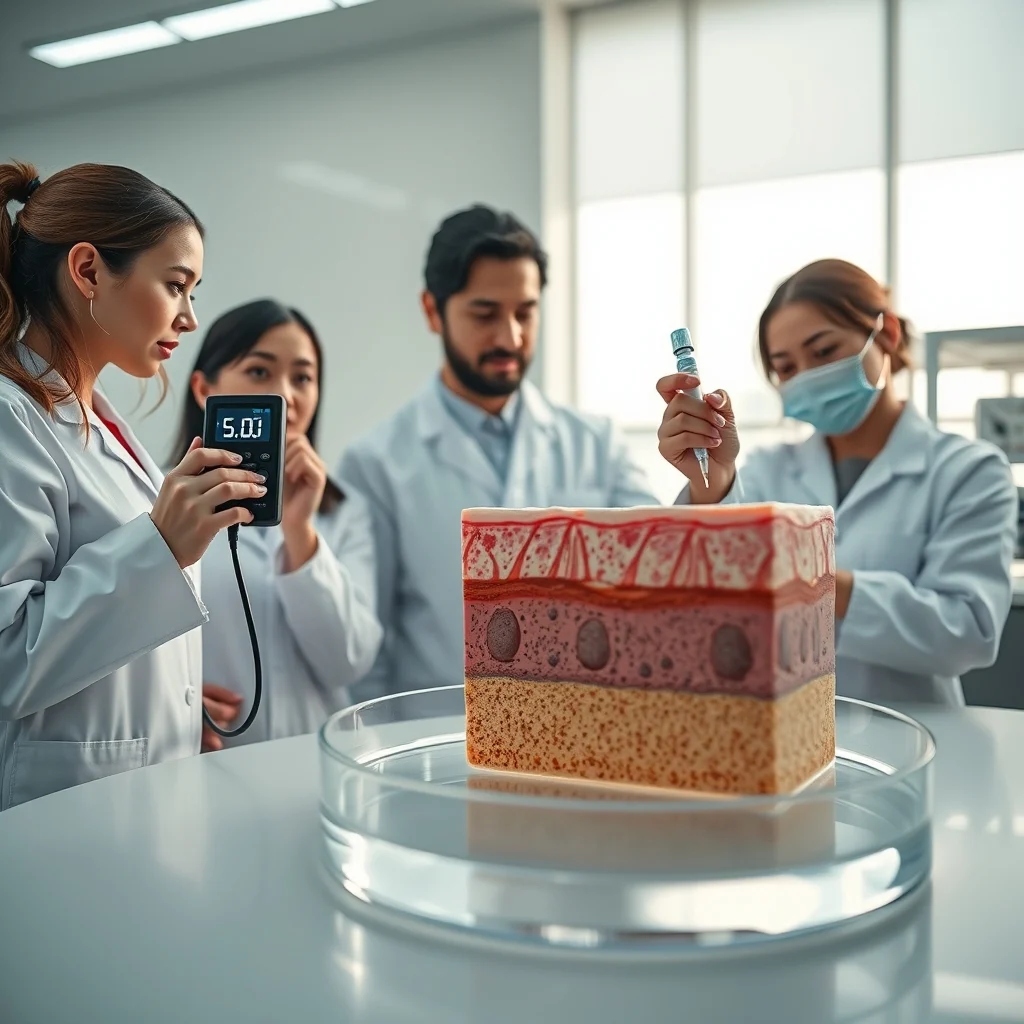
In 2024, the global skincare industry is witnessing a paradigm shift as Korean beauty (K-beauty) principles, particularly the emphasis on gentle barrier protection, redefine standards for skin health. This movement, rooted in decades of dermatological research and cultural practices, prioritizes the preservation of the skin’s acid mantle—a thin, protective film composed of sebum, sweat, and natural moisturizing factors. Unlike conventional skincare approaches that focus on immediate results, K-beauty’s framework advocates for preventive, non-stripping methods to maintain long-term resilience. The trend has gained traction across Asia, North America, and Europe, driven by rising consumer awareness of skin barrier dysfunction, which is linked to conditions like eczema, rosacea, and premature aging. Market data from Grand View Research indicates that the global barrier repair skincare market, valued at $12.4 billion in 2023, is projected to grow at a compound annual growth rate (CAGR) of 8.7% through 2030, with K-beauty brands accounting for nearly 30% of the segment’s innovation.
The origins of K-beauty’s gentle barrier protection philosophy trace back to South Korea’s post-war era, when economic constraints and limited access to advanced dermatological treatments necessitated a focus on preventive care. By the 1980s, Korean dermatologists began publishing studies on the acid mantle’s role in skin health, challenging the Western skincare norms of the time, which often relied on harsh cleansers and alcohol-based toners. The 1997 Asian financial crisis further accelerated the adoption of cost-effective, long-term skincare strategies, as consumers sought sustainable alternatives to expensive clinical procedures. Today, the movement is championed by a diverse ecosystem of stakeholders, including dermatologists, cosmetic chemists, K-beauty brands like COSRX and Dr. Jart+, and global retailers such as Sephora and YesStyle, which have expanded their K-beauty product lines to meet demand.
The Evolution of Gentle Barrier Protection in K-Beauty
The concept of barrier protection in K-beauty has evolved through distinct phases, shaped by scientific advancements and cultural shifts. In the 1970s, Korean skincare was heavily influenced by Japanese beauty practices, which emphasized hydration and sun protection but lacked a systematic approach to barrier maintenance. The 1990s marked a turning point with the introduction of pH-balanced cleansers, a response to research published in the Journal of Investigative Dermatology (1995) linking high-pH cleansers to increased transepidermal water loss (TEWL). By the early 2000s, the rise of K-beauty’s 10-step routine popularized the use of ceramide-rich moisturizers and hyaluronic acid serums, which reinforced the skin’s lipid barrier. A 2018 study by the Korean Dermatological Association found that 68% of participants who followed a barrier-focused routine for six months reported improved skin resilience, compared to 32% in the control group using conventional skincare.
The following timeline highlights key milestones in the development of K-beauty’s barrier protection philosophy:
- 1985: Introduction of Korea’s first pH-balanced cleanser, Etude House’s Mild Cleansing Foam, formulated at pH 5.5 to match the skin’s natural acidity.
- 1997: Launch of Dr. Jart+’s Ceramidin Cream, the first K-beauty moisturizer to use ceramides as a primary ingredient, inspired by research on lipid barrier repair.
- 2006: Publication of a landmark study in the Journal of Cosmetic Science demonstrating that low-pH cleansers reduce TEWL by 23% compared to alkaline alternatives.
- 2012: COSRX’s Low pH Good Morning Gel Cleanser becomes a global bestseller, selling over 10 million units by 2020 and popularizing the concept of non-stripping cleansing.
- 2019: The Korean Ministry of Food and Drug Safety (MFDS) mandates pH labeling for all cleansers, a regulatory move that further solidified the industry’s commitment to barrier-friendly formulations.
The Science Behind Gentle Barrier Protection
At the core of K-beauty’s barrier protection philosophy is the recognition of the skin as a dynamic, semi-permeable organ. The acid mantle, with a pH range of 4.5 to 5.5, serves as the first line of defense against environmental aggressors, pathogens, and moisture loss. Disruption of this barrier—whether through harsh cleansers, over-exfoliation, or environmental stressors—triggers a cascade of inflammatory responses, leading to conditions like atopic dermatitis and accelerated aging. A 2021 meta-analysis published in Dermatologic Therapy reviewed 42 studies and concluded that maintaining the skin’s pH below 5.5 reduces the risk of barrier dysfunction by 40%.
K-beauty’s approach to barrier protection relies on three key mechanisms:
- pH Optimization: Cleansers and toners are formulated at pH 4.5–5.5 to preserve the acid mantle. For example, Klairs’ Supple Preparation Unscented Toner (pH 4.5) uses a blend of hyaluronic acid and licorice root extract to hydrate while maintaining acidity.
- Lipid Replenishment: Ceramides, cholesterol, and fatty acids are incorporated into moisturizers to mimic the skin’s natural lipid barrier. Illiyoon’s Ceramide Ato Concentrate Cream contains a 3:1:1 ratio of ceramides, cholesterol, and fatty acids, a formulation proven in clinical trials to improve barrier function by 35% in four weeks.
- Inflammation Modulation: Ingredients like centella asiatica, panthenol, and madecassoside are used to calm irritation and support barrier repair. A 2020 study in the Journal of Drugs in Dermatology found that centella asiatica reduces redness by 28% and TEWL by 19% when applied topically for 28 days.
Dr. Sangwoo Park, a dermatologist at Seoul National University Hospital and lead author of the 2021 meta-analysis, explains the significance of these mechanisms: “The skin barrier is not static; it’s a living ecosystem that requires constant nourishment. K-beauty’s emphasis on pH balance and lipid replenishment addresses the root causes of barrier dysfunction, rather than merely treating symptoms. This is why we’re seeing such promising results in long-term studies.”
Quantitative Impact: Market Growth and Consumer Behavior
The global adoption of K-beauty’s barrier protection principles has been accompanied by measurable shifts in consumer behavior and market dynamics. According to a 2023 report by Euromonitor International, 62% of skincare consumers in the U.S. and Europe now prioritize products labeled as “barrier-friendly” or “pH-balanced,” up from 38% in 2018. The following table compares the growth of barrier-focused skincare products across key markets:
| Market | 2018 Sales (USD Billion) | 2023 Sales (USD Billion) | CAGR (2018–2023) | Top K-Beauty Brand (2023) |
|---|---|---|---|---|
| South Korea | 2.1 | 3.8 | 12.6% | COSRX |
| United States | 1.4 | 3.2 | 17.8% | Dr. Jart+ |
| China | 0.9 | 2.7 | 24.5% | Illiyoon |
| Europe | 0.7 | 1.9 | 22.1% | Klairs |
The data underscores the rapid expansion of the barrier protection segment, particularly in markets where K-beauty has gained cultural cachet. In China, for instance, the growth is driven by younger consumers (ages 18–35) who view K-beauty as a safer alternative to aggressive dermatological treatments. A 2023 survey by Tmall Global found that 71% of Chinese consumers in this demographic prefer K-beauty products for their “gentle yet effective” formulations, compared to 54% in 2020.
However, the movement is not without challenges. A 2022 study by the Journal of Cosmetic Dermatology highlighted discrepancies between marketing claims and clinical efficacy, with 34% of barrier-focused products failing to meet their stated pH or ceramide concentration benchmarks. Dr. Emily Chen, a cosmetic chemist and founder of the independent testing lab Skin Science Analytics, cautions against overgeneralization: “While K-beauty has pioneered many barrier-friendly innovations, not all products labeled as such deliver on their promises. Consumers need to look for third-party certifications and clinical data to make informed choices.”
Stakeholder Perspectives: Conflicts and Consensus
The rise of K-beauty’s barrier protection philosophy has sparked diverse reactions among stakeholders, reflecting broader tensions between innovation, regulation, and consumer expectations. Dermatologists and researchers largely endorse the movement’s scientific foundations, citing its alignment with evidence-based dermatology. Dr. Park notes, “The shift toward gentle, pH-balanced skincare is a net positive for public health. It reduces the incidence of contact dermatitis and other barrier-related conditions, which have been on the rise due to overuse of harsh actives like retinoids and AHAs.”
However, some industry veterans argue that the movement’s rapid commercialization has led to oversimplification. Dr. James Leyden, a professor emeritus of dermatology at the University of Pennsylvania and a pioneer in skin barrier research, warns: “While the principles are sound, the market is flooded with products that claim to protect the barrier without sufficient evidence. The term ‘barrier-friendly’ has become a buzzword, and that dilutes its scientific credibility.”
K-beauty brands, for their part, emphasize the cultural and economic dimensions of the movement. Charlotte Cho, co-founder of Soko Glam, a leading K-beauty retailer in the U.S., highlights the role of consumer education: “When we introduced K-beauty to the American market in 2012, most consumers were focused on quick fixes. Today, they’re asking about pH levels and ceramides. That shift didn’t happen overnight—it’s the result of years of advocacy and transparency.”
Regulators have also taken notice. In 2023, the U.S. Food and Drug Administration (FDA) issued draft guidance on pH labeling for cleansers, citing the need for standardized terminology to prevent misleading claims. The European Union’s Scientific Committee on Consumer Safety (SCCS) has similarly proposed stricter regulations on barrier-related marketing, though enforcement remains inconsistent. These developments reflect the growing recognition of barrier protection as a public health priority, but also the challenges of harmonizing global standards.
Consumer advocates, meanwhile, stress the need for greater accessibility. A 2023 report by the Environmental Working Group (EWG) found that barrier-focused K-beauty products are, on average, 22% more expensive than conventional alternatives, pricing out lower-income consumers. Nneka Leiba, vice president of healthy living science at EWG, argues: “The benefits of gentle barrier protection should not be limited to those who can afford premium products. We need more affordable, science-backed options to make this a truly inclusive movement.”
The interplay of these perspectives underscores the complexity of K-beauty’s barrier protection movement. While the scientific consensus supports its long-term benefits, the path to widespread adoption is fraught with commercial, regulatory, and socioeconomic challenges. As the market continues to evolve, the focus on education, transparency, and evidence-based innovation will determine whether the movement can transcend its niche origins to become a global standard. The upcoming revision of the EU’s Cosmetics Regulation, expected in 2025, may serve as a critical inflection point, potentially mandating pH and barrier-related claims to be substantiated by clinical data. Meanwhile, the rise of AI-driven skincare diagnostics, such as apps that analyze barrier function via smartphone cameras, could democratize access to personalized barrier protection strategies, further blurring the lines between clinical dermatology and consumer skincare. The trajectory of this movement will depend on how effectively stakeholders navigate these opportunities and challenges in the years ahead.
You may also like
-
The Comprehensive Dynamics of the Glass Skin Routine: Korea’s Luminous Skincare Philosophy and Its Global Scientific Validation
-
The Layered Logic of Korean Skincare: A Systematic Breakdown of Customization, Hydration, and Skin-Specific Radiance Strategies
-
The Strategic Evolution of the Seven Skin Method: Korea’s Layered Hydration Revolution and Its Scientific Foundations in Modern Skincare
-
Seoul’s K-Beauty Frontier: A Comprehensive Analysis of the Micro Spicule Tech Trend and Its Scientific, Cultural, and Market Implications
-
The Strategic Foundations of the Propolis Glow Serum: Korea’s Natural Elixir and Its Global Skincare Revolution