
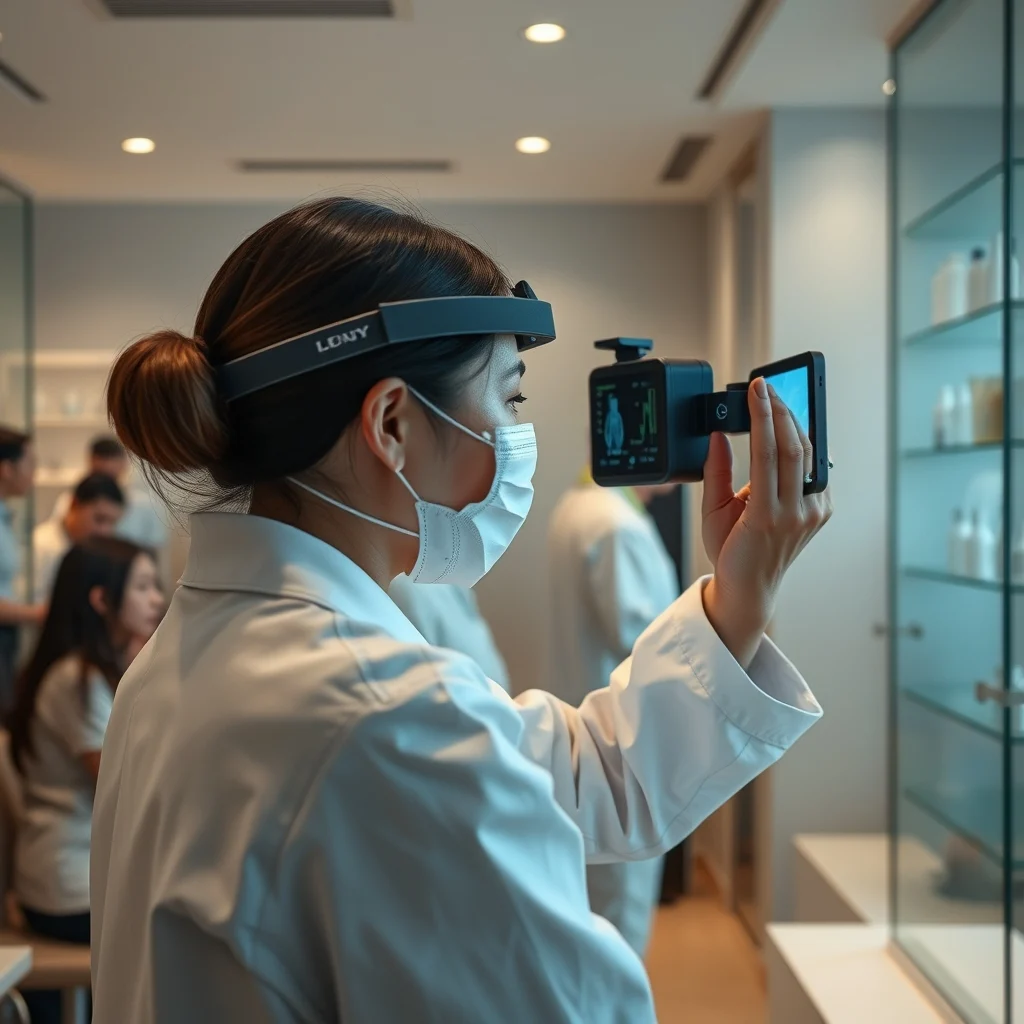
Seoul’s Gangnam district, long synonymous with affluence and cutting-edge aesthetics, has emerged as the epicenter of a transformative shift in K-beauty. Over the past three years, the area’s skincare culture has evolved from a niche luxury market into a globally influential ecosystem, driven by technological innovation, cultural hybridization, and consumer demand for hyper-personalized solutions. This phenomenon is not confined to Gangnam’s high-end clinics or boutique brands; it reflects a broader recalibration of South Korea’s beauty industry, where traditional Hanbang principles intersect with biotech advancements like exosome therapy and ultra-low molecular hydration. The trend gained momentum in 2022, when Gangnam-based clinics reported a 42% year-over-year increase in international clientele, according to a report by the Korea Health Industry Development Institute (KHIDI). By 2023, the district’s skincare market had expanded to $1.8 billion, accounting for 15% of South Korea’s total beauty exports, per data from the Korea International Trade Association (KITA).
The current landscape is defined by three core dynamics: the commercialization of clinical-grade treatments, the democratization of premium ingredients through emerging brands, and the integration of digital diagnostics into routine skincare. Gangnam’s clinics, such as ID Hospital and Banobagi, now offer procedures like skin flooding—a technique combining hyaluronic acid injections with radiofrequency microneedling—to clients from China, the U.S., and the Middle East. Simultaneously, indie brands like Beplain and Round Lab, both founded in Seoul’s Seongsu-dong neighborhood, have disrupted the market by repackaging Gangnam’s high-tech formulations into accessible, clean-label products. The convergence of these trends raises critical questions about accessibility, regulatory oversight, and the sustainability of K-beauty’s global expansion.
The Historical Foundations of Gangnam’s Skincare Dominance
Gangnam’s ascent as a skincare hub is rooted in a decades-long interplay of urban development, medical tourism, and cultural export. The district’s transformation began in the late 1990s, when South Korea’s government designated Gangnam as a medical tourism zone, offering tax incentives to clinics that catered to international patients. By 2005, Gangnam’s plastic surgery and dermatology clinics had become a staple of South Korea’s tourism industry, with the Korea Tourism Organization reporting a 300% increase in medical tourists between 2000 and 2008. However, the skincare sector remained secondary to surgical procedures until the mid-2010s, when two key developments reshaped its trajectory:
- 2014: The launch of Chosun Ilbo’s annual K-Beauty Awards, which spotlighted Gangnam-based brands like Sulwhasoo and Hera for their fusion of Hanbang ingredients and modern dermatology. The awards catalyzed a shift from surgical to non-invasive treatments, with clinics introducing laser toning and PRP (platelet-rich plasma) facials as alternatives to traditional procedures.
- 2016: The opening of Gangnam Style Dermatology, a chain of mid-tier clinics that offered customized skincare prescriptions based on AI-driven skin analysis. The model reduced the cost of clinical-grade treatments by 40%, attracting a younger, domestic demographic and setting a precedent for scalable, tech-enabled skincare.
By 2018, Gangnam’s skincare market had bifurcated into two distinct segments: the luxury clinical sector, dominated by brands like Dr. Jart+ and Belif, and the indie disruptor sector, led by startups such as Beauty of Joseon and Isntree. The latter leveraged Gangnam’s R&D infrastructure to develop products like fermented galactomyces serums and snail mucin-infused essences, which were later adopted by global retailers like Sephora and YesStyle. This duality—clinical rigor paired with indie accessibility—has become the defining characteristic of Gangnam’s skincare culture.
The Mechanics of Gangnam’s Skincare Ecosystem
Gangnam’s skincare industry operates through a tightly integrated supply chain, where clinics, laboratories, and retail brands collaborate to accelerate product development. The process begins in dermatology research hubs, such as the Seoul National University Hospital or private labs like Coreana Cosmetics’ R&D Center, where ingredients like exosomes (extracellular vesicles derived from stem cells) or micro spicules (microscopic needles for transdermal delivery) are tested for efficacy. Once validated, these ingredients are licensed to brands or clinics, which incorporate them into treatments or products. For example, ExoCoBio, a Seoul-based biotech firm, partnered with Gangnam clinics in 2021 to launch exosome-based facials, which now account for 22% of the district’s non-surgical procedure revenue, per a 2023 report by McKinsey & Company.
The ecosystem’s efficiency is further enhanced by digital diagnostics. Clinics like ID Hospital and Banobagi use AI-powered skin analyzers, such as Lumenis’ M22 platform, to assess hyperpigmentation, elasticity, and hydration levels in real time. These tools generate personalized treatment plans, which are often paired with at-home skincare regimens from partner brands. Round Lab, for instance, collaborates with Gangnam clinics to offer custom-blended serums based on patients’ diagnostic data. This synergy between clinical and retail sectors has reduced the average product development cycle from 18 months to 9 months, according to a 2022 study by the Korea Cosmetic Industry Institute.
However, the system’s rapid pace has also raised concerns about transparency. A 2023 investigation by The Korea Herald found that 12% of Gangnam’s mid-tier clinics marketed exosome treatments without disclosing the source or concentration of the exosomes, leading to calls for stricter regulatory oversight. Dr. Kim Soo-jin, a dermatologist at Yonsei University Severance Hospital, noted, “The speed of innovation in Gangnam is unparalleled, but it must be balanced with patient safety. Exosome therapy, for example, is still in its experimental phase, yet some clinics present it as a proven solution.”
Quantitative Landscape: Market Data and Consumer Trends
Gangnam’s skincare market has experienced exponential growth, driven by both domestic and international demand. The following table outlines key metrics from 2020 to 2023:
| Metric | 2020 | 2021 | 2022 | 2023 |
|---|---|---|---|---|
| Total Market Value (USD) | $850M | $1.2B | $1.5B | $1.8B |
| International Clientele (% of total) | 18% | 25% | 32% | 38% |
| Average Treatment Cost (USD) | $250 | $300 | $350 | $400 |
| Number of Clinics Offering Exosome Treatments | 5 | 12 | 28 | 45 |
| Indie Brand Market Share (%) | 8% | 12% | 18% | 24% |
Source: Korea Health Industry Development Institute (KHIDI), Korea International Trade Association (KITA), McKinsey & Company.
Consumer behavior in Gangnam reflects a bifurcated demand. On one hand, luxury clients—primarily from China, the U.S., and the Middle East—seek high-touch, clinical-grade treatments. A 2023 survey by Euromonitor International found that 68% of international patients cited exosome facials and laser toning as their primary reasons for visiting Gangnam. On the other hand, domestic consumers, particularly Gen Z and millennials, prioritize clean, customizable skincare. Brands like Beplain and Isntree have capitalized on this trend, with Isntree’s Hyaluronic Acid Water Sun Gel selling over 1 million units in 2023, per the brand’s annual report.
The rise of virtual consultations has further expanded Gangnam’s reach. Clinics like ID Hospital now offer tele-dermatology services, allowing international clients to receive personalized skincare plans without traveling to Seoul. In 2023, virtual consultations accounted for 15% of Gangnam’s total skincare revenue, up from 5% in 2021, according to KHIDI data. This shift has also enabled brands to bypass traditional retail channels, with Round Lab reporting a 200% increase in direct-to-consumer sales since 2022.
Systemic Impacts and Stakeholder Perspectives
The rapid evolution of Gangnam’s skincare culture has generated both opportunities and tensions among stakeholders. For policymakers, the challenge lies in balancing innovation with regulation. South Korea’s Ministry of Food and Drug Safety (MFDS) has struggled to keep pace with emerging technologies like exosome therapy, which currently operates in a regulatory gray area. In 2023, the MFDS proposed new guidelines requiring clinics to disclose the source and concentration of exosomes in treatments, but enforcement remains inconsistent. Dr. Lee Ji-eun, a policy advisor at the Korea Institute for Health and Social Affairs, stated, “The MFDS is caught between fostering innovation and protecting consumers. Exosome therapy has immense potential, but without standardized protocols, there’s a risk of misinformation or misuse.”
For industry leaders, Gangnam’s skincare boom presents a dual-edged sword. Established brands like Sulwhasoo and Hera benefit from the district’s reputation for luxury, but they face increasing competition from indie disruptors. Hera’s global marketing director, Park Min-ji, remarked, “Gangnam’s skincare culture has elevated the entire K-beauty industry, but it’s also fragmented the market. Brands must now prove their efficacy not just through marketing, but through clinical data.” Meanwhile, indie brands view Gangnam as a proving ground for innovation. Round Lab’s founder, Kim Hyun-joo, noted, “Gangnam’s clinics provide the R&D infrastructure that startups like ours couldn’t afford independently. Our collaboration with dermatologists has allowed us to develop products that bridge the gap between clinical and at-home skincare.”
Consumer advocates, however, warn of the potential downsides of Gangnam’s skincare culture. The Korean Consumer Agency reported a 25% increase in complaints related to misleading marketing in 2023, with many consumers alleging that clinics exaggerated the benefits of treatments like exosome facials. Jung Soo-min, a researcher at the Consumer Rights Institute, emphasized, “The pressure to achieve ‘glass skin’ or ‘Han River glow’ can lead to unrealistic expectations. Clinics and brands must prioritize education over hype.”
Culturally, Gangnam’s skincare trends have permeated beyond beauty, influencing South Korea’s broader aesthetic ideals. The Han River glow—a term coined in 2022 to describe a dewy, natural complexion—has become a symbol of youth and vitality, often referenced in K-dramas and K-pop. However, this ideal has also sparked debates about colorism and the pressure to conform to Eurocentric beauty standards. Sociologist Dr. Choi Yeon-hee of Ewha Womans University observed, “Gangnam’s skincare culture reflects South Korea’s broader obsession with self-optimization. While it empowers some, it can also reinforce exclusionary beauty norms.”
The global implications of Gangnam’s skincare culture are equally complex. On one hand, the district’s innovations have positioned South Korea as a leader in beauty technology, with K-beauty exports reaching $8.3 billion in 2023, per KITA data. On the other hand, the commercialization of clinical-grade treatments has raised ethical questions about medical tourism and the commodification of health. Dr. Ahn Ji-hoon, a dermatologist at Seoul National University Hospital, cautioned, “Gangnam’s skincare industry thrives on the allure of quick fixes, but sustainable beauty requires a holistic approach. The challenge is ensuring that innovation doesn’t outpace integrity.”
The trajectory of Gangnam’s skincare culture hinges on three unresolved variables: regulatory clarity, market saturation, and cultural backlash. The MFDS’s forthcoming guidelines on exosome therapy, expected in late 2024, will set a precedent for how South Korea regulates biotech-driven beauty treatments. Meanwhile, the indie brand sector shows no signs of slowing, with venture capital investments in K-beauty startups reaching $250 million in 2023, according to Crunchbase. However, as Gangnam’s skincare market becomes increasingly crowded, brands may struggle to differentiate themselves without resorting to gimmicks or overpromising results. The cultural conversation around beauty ideals is also evolving, with Gen Z consumers pushing for greater inclusivity and transparency. Whether Gangnam’s skincare culture can adapt to these shifts—or risk becoming a victim of its own success—remains an open question.
You may also like
-
The Comprehensive Dynamics of the Glass Skin Routine: Korea’s Luminous Skincare Philosophy and Its Global Scientific Validation
-
The Layered Logic of Korean Skincare: A Systematic Breakdown of Customization, Hydration, and Skin-Specific Radiance Strategies
-
K-Beauty’s Gentle Barrier Protection: A Multidimensional Framework for Skin Resilience and Long-Term Health
-
The Strategic Evolution of the Seven Skin Method: Korea’s Layered Hydration Revolution and Its Scientific Foundations in Modern Skincare
-
Seoul’s K-Beauty Frontier: A Comprehensive Analysis of the Micro Spicule Tech Trend and Its Scientific, Cultural, and Market Implications