
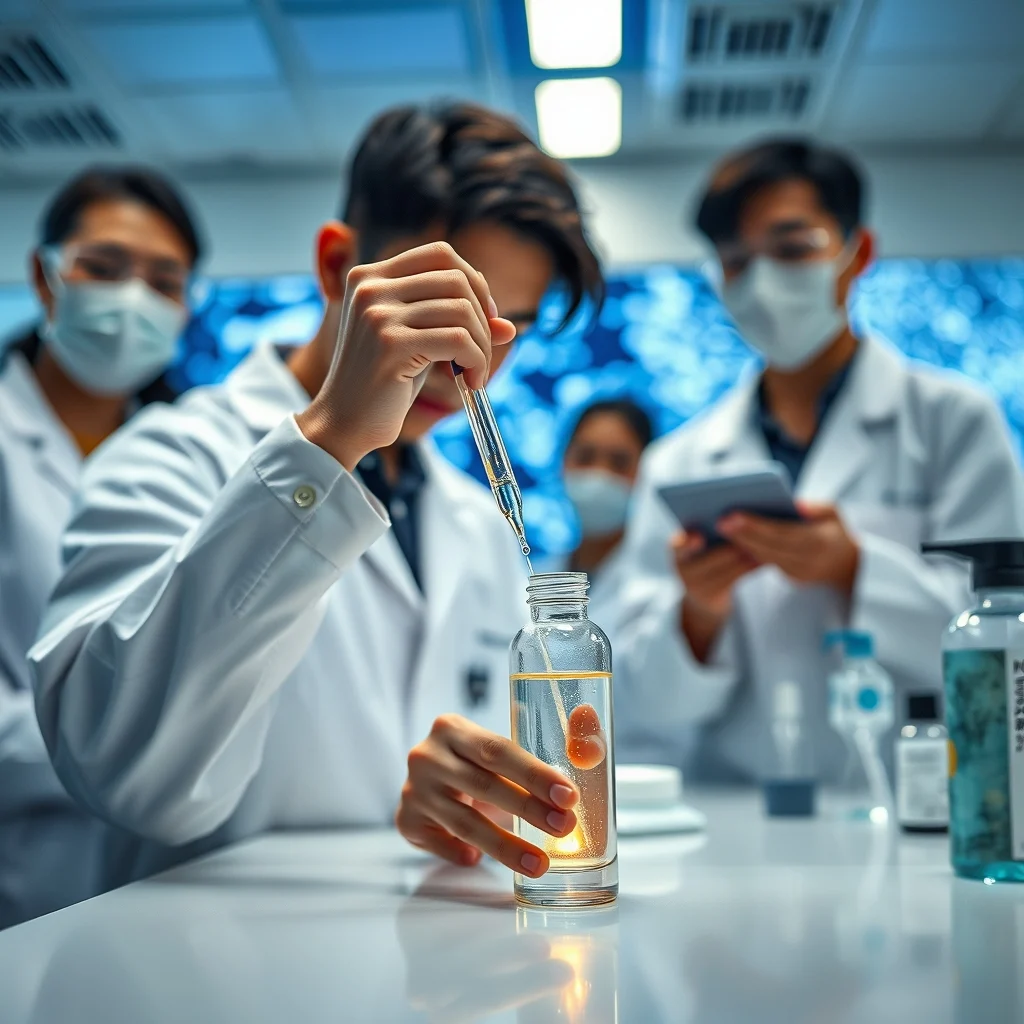
Seoul’s skincare landscape is undergoing a rapid transformation, driven by technological advancements, cultural evolution, and shifting consumer demands. Over the past three years, the city has emerged as the epicenter of next-generation K-beauty, introducing trends like skin flooding, exosome-based therapies, and ultra-low molecular hydration that are redefining global beauty standards. This shift is not confined to laboratories or high-end clinics; it permeates daily routines in neighborhoods like Myeongdong, Gangnam, and Seongsu-dong, where consumers and brands alike are adopting a more scientific, personalized approach to skincare. The movement is fueled by a convergence of factors: South Korea’s regulatory support for cosmetic innovation, a digitally native consumer base, and a cultural obsession with glass skin that has evolved beyond superficial aesthetics into a holistic wellness philosophy.
The current wave of K-beauty innovation is distinct from its predecessors. While the early 2010s were defined by the 10-step routine and sheet masks, today’s trends prioritize efficacy, customization, and sustainability. Brands like Dr. Jart+, Cellreturn, and Lapcos are leading the charge, leveraging biotechnology to develop products that promise visible results in shorter timeframes. Simultaneously, traditional hanbang (Korean herbal medicine) is being modernized, with ingredients like ginseng and reishi mushroom undergoing fermentation processes to enhance their bioavailability. These developments are not merely cosmetic; they reflect broader societal shifts, including an aging population seeking preventative skincare and younger consumers demanding transparency in ingredient sourcing and environmental impact.
The Evolution of K-Beauty: From Rituals to Biotechnology
The roots of Seoul’s skincare dominance trace back to the 1980s, when South Korea’s government identified cosmetics as a strategic industry for economic growth. By the 1990s, brands like Amorepacific and LG Household & Health Care had established research institutes dedicated to dermatological innovation. However, the global K-beauty phenomenon did not gain traction until the mid-2010s, when the Hallyu (Korean Wave) introduced international audiences to the country’s beauty rituals. The timeline below highlights key milestones in this evolution:
- 1980s: Government-led initiatives to boost domestic cosmetic production, leading to the establishment of R&D centers by conglomerates like Amorepacific.
- 2000s: Introduction of BB creams, which combined skincare and makeup, marking the first major K-beauty export to global markets.
- 2012: The rise of the 10-step skincare routine, popularized by influencers and K-drama stars, which emphasized layering products for hydration and brightening.
- 2016: Launch of snail mucin serums by brands like COSRX, which became a cult favorite for its reparative properties.
- 2019: Regulatory approval for exosome-based skincare in South Korea, paving the way for clinical-grade beauty products.
- 2022: Emergence of micro spicule technology, which uses dissolvable microneedles to deliver active ingredients deeper into the skin.
This progression underscores a shift from ritualistic skincare to science-backed solutions. Dr. Kim Soo-ji, a dermatologist at Yonsei University Severance Hospital, notes, “The early K-beauty trends were about creating a sensory experience—fragrances, textures, and packaging. Today, consumers want measurable outcomes, whether it’s collagen stimulation or barrier repair. The focus has moved from ‘feel’ to ‘function.’”
How Seoul’s Skincare Innovations Work: The Science Behind the Trends
The latest K-beauty trends are underpinned by cutting-edge biotechnology. Below is a breakdown of the mechanisms driving three of the most prominent innovations:
1. Skin Flooding
Skin flooding is a hydration technique that involves layering humectants, emollients, and occlusives to create a reservoir of moisture within the skin. Unlike traditional moisturizing, which focuses on surface-level hydration, skin flooding targets the dermis, where collagen and elastin fibers reside. Products like Laneige’s Cica Sleeping Mask and Illiyoon’s Ceramide Ato Concentrate Cream use hyaluronic acid in varying molecular weights to penetrate different skin layers. A 2023 study published in the Journal of Cosmetic Dermatology found that participants using a skin flooding routine for four weeks experienced a 32% increase in skin hydration levels, compared to 18% in the control group using a standard moisturizer.
2. Exosome Therapy
Exosomes are extracellular vesicles derived from stem cells that facilitate cell-to-cell communication. In skincare, they are used to deliver growth factors and peptides that promote tissue regeneration. Brands like ExoCell and Dr. Dream have incorporated exosomes into serums and ampoules, claiming to accelerate wound healing and reduce inflammation. Clinical trials conducted by Seoul National University Hospital in 2022 demonstrated a 40% reduction in post-procedure redness among patients using exosome-based products, compared to 25% in the placebo group. However, the technology remains controversial due to its high cost and limited long-term safety data.
3. Micro Spicule Technology
Micro spicules are dissolvable microneedles made from hyaluronic acid or collagen that create micro-channels in the skin, allowing active ingredients to bypass the stratum corneum. Unlike traditional microneedling, which requires professional administration, micro spicule patches can be applied at home. A 2023 report by Korea Health Industry Development Institute (KHIDI) found that products using this technology, such as Mediheal’s NMF Aquaring Ampoule Mask, increased the absorption of niacinamide by 78% compared to topical application alone. The technology is particularly popular among consumers seeking non-invasive alternatives to in-clinic treatments like laser therapy.
Quantitative Impact: Market Growth and Consumer Behavior
The global K-beauty market was valued at $13.1 billion in 2023, with Seoul-based brands accounting for 60% of the revenue, according to a report by Statista. The following table illustrates the growth trajectory of key segments within the market:
| Segment | 2020 Revenue (USD) | 2023 Revenue (USD) | CAGR (2020-2023) |
|---|---|---|---|
| Skincare | $6.2 billion | $9.8 billion | 16.3% |
| Makeup | $2.1 billion | $2.5 billion | 6.1% |
| Haircare | $800 million | $1.2 billion | 14.5% |
| Men’s Grooming | $500 million | $900 million | 21.8% |
Consumer behavior in Seoul reflects a demand for hyper-personalized solutions. A 2023 survey by McKinsey & Company revealed that 72% of South Korean skincare consumers use at least one customized product, such as Atopalm’s MLE Cream, which is tailored to individual skin concerns. The rise of virtual consultations has further accelerated this trend, with platforms like StyleKorea and K-Beauty Now offering AI-driven skin analyses that recommend products based on selfies and lifestyle data. “The Korean consumer is no longer satisfied with one-size-fits-all solutions,” says Lee Ji-eun, CEO of BeautyPlus AI. “They want products that adapt to their skin’s daily fluctuations, whether it’s pollution levels, stress, or hormonal changes.”
Despite the market’s growth, challenges persist. Counterfeit products remain a significant issue, with the Korean Intellectual Property Office (KIPO) reporting a 25% increase in counterfeit skincare seizures in 2023. Additionally, the industry faces scrutiny over sustainability, with environmental groups criticizing the excessive use of plastic packaging. In response, brands like Innisfree and The Face Shop have introduced refillable containers and biodegradable sheet masks, though these initiatives are still in their early stages.
Stakeholder Perspectives: Conflicting Priorities and Shared Goals
The rapid evolution of Seoul’s skincare industry has given rise to diverse—and often conflicting—stakeholder perspectives. Below are the viewpoints of four key groups shaping the future of K-beauty:
1. Regulatory Bodies
The Ministry of Food and Drug Safety (MFDS) plays a pivotal role in approving new ingredients and technologies. While the agency has streamlined the approval process for biotech-based products, it faces pressure to balance innovation with safety. “Our priority is to ensure that new technologies like exosomes and micro spicules are backed by rigorous clinical data,” says Dr. Park Min-ji, a senior official at MFDS. “However, we also recognize the need to support domestic brands in maintaining their competitive edge.” The agency is currently reviewing guidelines for AI-driven skincare diagnostics, which could set a global precedent for digital beauty regulation.
2. Independent Researchers
Academics and scientists are divided on the long-term efficacy of emerging trends. Dr. Choi Hyun-joo, a biochemist at Korea Advanced Institute of Science and Technology (KAIST), cautions against overhyping technologies like exosomes. “While the initial results are promising, we lack longitudinal studies on their safety and efficacy,” she says. “There’s a risk that consumers may develop resistance to growth factors over time, or that unregulated use could lead to unintended side effects.” Conversely, researchers at Seoul National University argue that the benefits outweigh the risks, citing studies that show exosomes can reduce scarring and accelerate healing in burn victims.
3. Beauty Brands
Established conglomerates and indie brands are adopting divergent strategies to capitalize on the trends. Amorepacific, which owns brands like Sulwhasoo and Laneige, is investing heavily in fermented botanicals, opening a $200 million R&D center in 2023 dedicated to hanbang-based skincare. “Fermentation enhances the potency of traditional ingredients, making them more effective for modern skin concerns,” explains Kim Hye-jin, Amorepacific’s chief innovation officer. Meanwhile, smaller brands like Beplain and Round Lab are focusing on ultra-low molecular hydration, using ingredients like polyglutamic acid to deliver deeper hydration. “Our goal is to democratize access to clinical-grade skincare,” says Beplain’s founder, Lee Soo-ah. “We’re proving that you don’t need a luxury price tag to achieve glass skin.”
4. Consumers
For Seoul’s skincare enthusiasts, the latest trends represent both opportunity and overwhelm. “I love that there are so many options, but it’s hard to know what actually works,” says 28-year-old marketing professional Park Ji-won, who spends an average of $300 monthly on skincare. “I’ve tried everything from exosome serums to micro spicule patches, but I’m still figuring out what’s right for my skin.” Younger consumers, in particular, are drawn to Hongdae’s skincare culture, where pop-up stores and experiential retail spaces offer hands-on product testing. “It’s not just about buying products; it’s about the experience,” says 22-year-old university student Kim Min-seo. “I go to Hongdae to learn about new trends, not just to shop.”
The industry’s future hinges on its ability to reconcile these competing priorities. Regulatory bodies must navigate the fine line between fostering innovation and ensuring safety, while brands grapple with the challenge of scaling hyper-personalized solutions. Consumers, for their part, are becoming more discerning, demanding transparency and sustainability alongside efficacy. As Seoul’s skincare ecosystem continues to evolve, one thing is clear: the next frontier of K-beauty will be defined not just by what’s in the bottle, but by the values and technologies that shape its creation. The upcoming Seoul Fashion Week in October 2024 is expected to showcase the latest skincare-meets-fashion collaborations, offering a glimpse into how these trends will integrate into broader lifestyle movements. Meanwhile, the Korean FDA’s decision on AI-driven diagnostics, slated for early 2025, could either accelerate or stifle the growth of virtual consultations, depending on the stringency of the regulations. For now, the city remains a living laboratory for skincare innovation, where tradition and technology coexist in a delicate, ever-shifting balance.
You may also like
-
The Comprehensive Dynamics of the Glass Skin Routine: Korea’s Luminous Skincare Philosophy and Its Global Scientific Validation
-
The Layered Logic of Korean Skincare: A Systematic Breakdown of Customization, Hydration, and Skin-Specific Radiance Strategies
-
K-Beauty’s Gentle Barrier Protection: A Multidimensional Framework for Skin Resilience and Long-Term Health
-
The Strategic Evolution of the Seven Skin Method: Korea’s Layered Hydration Revolution and Its Scientific Foundations in Modern Skincare
-
Seoul’s K-Beauty Frontier: A Comprehensive Analysis of the Micro Spicule Tech Trend and Its Scientific, Cultural, and Market Implications