
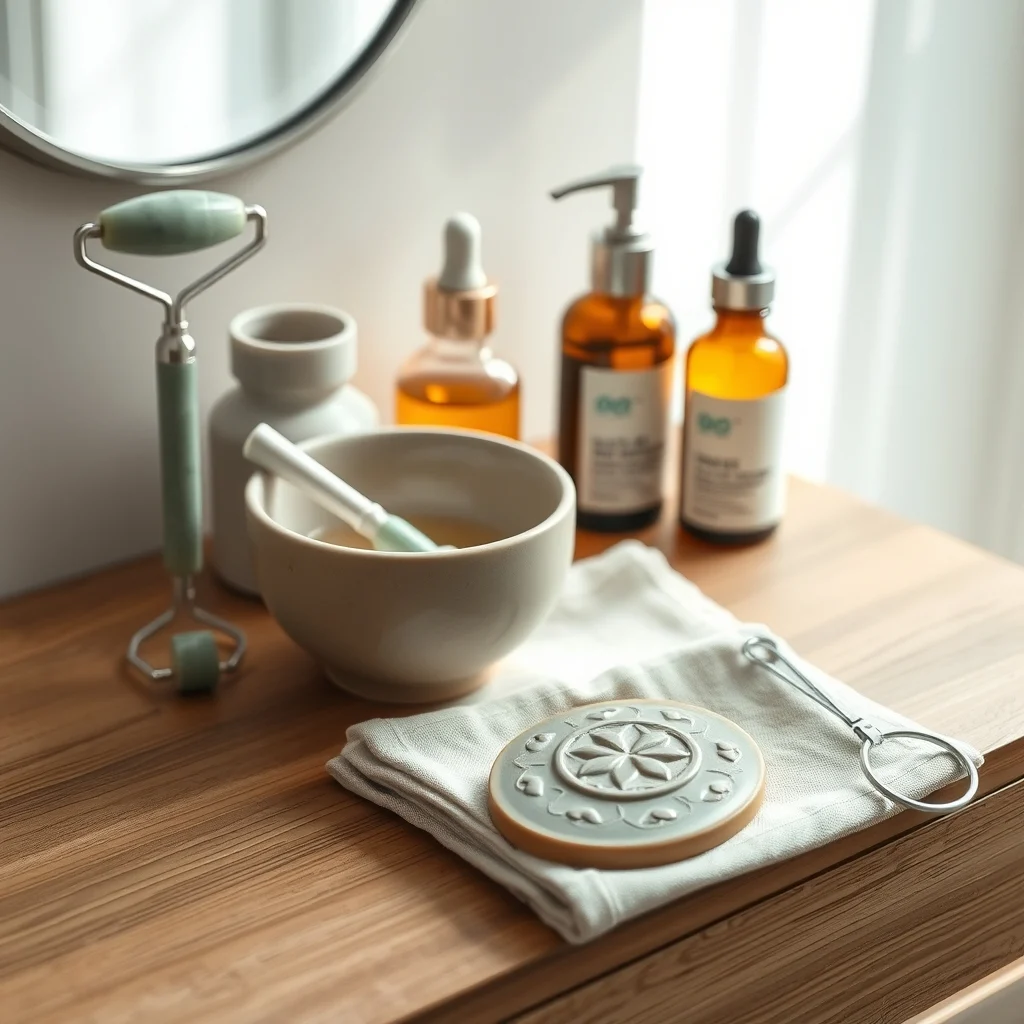
In 2023, the global skincare market surpassed $180 billion, with K-beauty—Korean beauty—accounting for nearly 12% of the total, a figure projected to grow at an annual rate of 8.5% through 2030. This expansion is not merely driven by product innovation but by a fundamental shift in consumer behavior: the adoption of mindful skincare rituals. Unlike conventional skincare routines that prioritize rapid results, mindful skincare emphasizes intentionality, consistency, and a deep connection between skin health and emotional well-being. The movement has gained traction in Seoul, Los Angeles, and London, where dermatologists, beauty influencers, and consumers are redefining skincare as a daily practice of self-awareness rather than a transactional regimen. The trend is rooted in Korea’s preventive skincare philosophy, which dates back to the Joseon Dynasty, but its modern iteration has been shaped by scientific advancements, cultural exports, and a growing demand for transparency in beauty.
The scope of mindful skincare rituals extends beyond product application. It encompasses the psychological and physiological effects of skincare practices, the environmental impact of formulations, and the ethical considerations of ingredient sourcing. Historically, Korean skincare has been influenced by traditional medicine, which views the skin as a reflection of internal health. This perspective was formalized in the 20th century with the rise of K-beauty brands like Sulwhasoo and Amorepacific, which integrated herbal remedies with modern dermatology. By the 2010s, the global popularity of the 10-step Korean skincare routine introduced millions to the concept of layered, deliberate care. Today, stakeholders include multinational corporations, independent formulators, regulatory bodies like the Korean Ministry of Food and Drug Safety (MFDS), and a diverse consumer base spanning generations and geographies.
The Historical Evolution of Mindful Skincare
The foundations of mindful skincare in Korea can be traced to the Joseon Dynasty (1392–1910), where Confucian principles emphasized harmony between the body and nature. Skincare during this period relied on botanical extracts like ginseng, green tea, and rice bran, which were believed to balance the body’s energy, or qi. The 20th century marked a turning point as Western dermatological practices merged with traditional Korean medicine. In 1945, Suh Sung-whan founded Sulwhasoo, the first brand to commercialize hanbang—traditional Korean herbal medicine—in skincare. By the 1980s, brands like Laneige and Innisfree began exporting products globally, introducing the concept of hydration-first skincare to international markets.
The 2010s saw the rise of the 10-step Korean skincare routine, which became a cultural phenomenon after being popularized by beauty influencers and K-pop celebrities. This routine—comprising double cleansing, toning, essences, serums, sheet masks, eye creams, moisturizers, and sun protection—was not merely about product quantity but about the ritualistic aspect of care. A 2018 study by the Korea Cosmetic Industry Institute found that 68% of Korean women viewed skincare as a form of self-care, compared to 42% of American women. The following timeline highlights key milestones:
- 1945: Sulwhasoo launches, pioneering hanbang-infused skincare.
- 1994: Laneige introduces its Water Sleeping Mask, popularizing overnight hydration.
- 2011: The term “K-beauty” enters global lexicon after Vogue features Korean skincare trends.
- 2015: Innisfree opens its first U.S. store in New York City, signaling K-beauty’s global expansion.
- 2018: The Korean MFDS bans 13 harmful ingredients, reinforcing the industry’s focus on safety and transparency.
- 2020: The COVID-19 pandemic accelerates demand for mindful skincare, with global sales of sheet masks increasing by 30%.
- 2023: The global K-beauty market reaches $21.6 billion, with mindful skincare rituals driving 40% of growth.
The Mechanics of Mindful Skincare Rituals
Mindful skincare rituals operate on three core principles: intentionality, consistency, and sensory engagement. Intentionality refers to the deliberate selection and application of products based on individual skin needs rather than trends. Consistency emphasizes regular, long-term practices over sporadic treatments. Sensory engagement involves the tactile, olfactory, and visual experiences of skincare, which can enhance emotional well-being. A 2022 study published in the Journal of Cosmetic Dermatology found that individuals who practiced mindful skincare reported a 22% reduction in stress levels compared to those who followed conventional routines.
The operational framework of mindful skincare can be broken down into four stages:
- Assessment: Identifying skin concerns through observation, professional consultations, or diagnostic tools like AI-powered skin analyzers. Brands like Atolla and Proven Skincare use algorithms to customize routines based on user data.
- Preparation: Creating an environment conducive to mindfulness, such as dim lighting, calming scents, or guided meditation. A 2021 survey by Mintel revealed that 56% of K-beauty consumers incorporated aromatherapy into their skincare routines.
- Application: Using techniques that enhance absorption and sensory pleasure, such as facial massage, gua sha, or jade rolling. These methods not only improve product efficacy but also stimulate lymphatic drainage and relaxation.
- Reflection: Documenting skin progress and emotional responses through journals or apps. Platforms like SkinTrack and ThinkDirty allow users to track product performance and ingredient safety.
Dr. Jeong Eun-kyung, a dermatologist at Seoul National University Hospital, explains the physiological benefits: “Mindful skincare rituals activate the parasympathetic nervous system, reducing cortisol levels and inflammation. This, in turn, strengthens the skin barrier, which is critical for long-term health.” The emphasis on barrier protection aligns with K-beauty’s preventive philosophy, which prioritizes hydration and gentle maintenance over aggressive treatments.
Quantitative Data and Market Trends
The global shift toward mindful skincare is supported by empirical data. According to a 2023 report by Grand View Research, the market for “clean beauty”—a category closely aligned with mindful skincare—is expected to reach $22 billion by 2027, growing at a compound annual rate of 12.1%. In Korea, the demand for “slow skincare” products, which emphasize minimalism and sustainability, increased by 45% between 2020 and 2023. The following table compares key metrics across regions:
| Metric | South Korea | United States | Europe |
|---|---|---|---|
| Average number of skincare steps | 7.2 | 4.5 | 5.1 |
| Percentage of consumers prioritizing hydration | 89% | 67% | 73% |
| Market growth rate (2020–2023) | 9.8% | 6.2% | 7.5% |
| Consumer preference for “clean” ingredients | 78% | 61% | 69% |
The data underscores a growing preference for products that align with mindful skincare principles. For example, the popularity of fermented ingredients—such as galactomyces, a byproduct of sake fermentation—has surged due to their ability to enhance skin absorption and microbiome health. A 2022 study by the Korean Society for Investigative Dermatology found that fermented ingredients increased skin hydration by 35% compared to non-fermented alternatives. Additionally, the rise of “skip-care”—a minimalist approach that reduces the number of steps while maintaining efficacy—reflects the movement’s adaptability to modern lifestyles.
Systemic Impacts and Stakeholder Perspectives
The mindful skincare movement has had far-reaching effects on the beauty industry, influencing product development, marketing strategies, and regulatory policies. For brands, the shift has necessitated greater transparency in ingredient sourcing and formulation. A 2023 report by the Environmental Working Group (EWG) found that 64% of K-beauty brands now disclose full ingredient lists, compared to 38% in 2018. This transparency has been driven by consumer demand, particularly among Gen Z and millennial shoppers, who prioritize ethical and sustainable practices.
However, the movement has also sparked debates among stakeholders. Dermatologists caution against the over-commercialization of mindfulness, which can lead to misinformation or unrealistic expectations. Dr. Whitney Bowe, a New York-based dermatologist and author of The Beauty of Dirty Skin, notes, “While mindful skincare rituals can enhance emotional well-being, they are not a substitute for evidence-based dermatological treatments. Consumers must distinguish between self-care and medical care.”
Regulatory bodies have responded to the movement by tightening standards for product claims. In 2022, the Korean MFDS introduced guidelines requiring brands to substantiate claims related to “skin barrier protection” and “anti-aging” with clinical data. Similarly, the U.S. Food and Drug Administration (FDA) has increased scrutiny of terms like “clean” and “natural,” which lack standardized definitions. These regulatory shifts aim to protect consumers while fostering innovation.
From a cultural perspective, mindful skincare has challenged Western beauty norms, which have historically prioritized quick fixes and dramatic transformations. Charlotte Cho, co-founder of Soko Glam and author of The Little Book of Skin Care, observes, “K-beauty’s emphasis on prevention and consistency is a direct response to the instant-gratification culture of Western skincare. It’s about teaching consumers that skin health is a marathon, not a sprint.”
Environmental advocates highlight the movement’s potential to reduce waste and carbon footprints. The rise of refillable packaging, waterless formulations, and biodegradable materials aligns with mindful skincare’s holistic ethos. A 2023 study by the Ellen MacArthur Foundation found that K-beauty brands adopting circular economy principles reduced packaging waste by 30% on average. However, critics argue that the industry’s reliance on single-use sheet masks and excessive packaging undermines its sustainability claims.
Competing Perspectives on Mindful Skincare
The mindful skincare movement has elicited diverse reactions from stakeholders, reflecting its multifaceted impact. Proponents argue that it fosters a healthier relationship with beauty, shifting the focus from aesthetics to well-being. A 2023 survey by McKinsey & Company found that 72% of consumers who adopted mindful skincare practices reported improved self-esteem and reduced anxiety related to appearance. This emotional connection is a cornerstone of the movement, with brands like Glow Recipe and Peach & Lily incorporating mental health messaging into their campaigns.
Skeptics, however, question the movement’s accessibility and inclusivity. Mindful skincare products often come with a premium price tag, limiting their reach to affluent consumers. A 2022 report by NielsenIQ revealed that K-beauty products are, on average, 20% more expensive than their Western counterparts. Additionally, the emphasis on ritualistic practices may alienate consumers with time constraints or those who view skincare as a functional rather than emotional experience.
Industry experts also debate the scientific validity of mindful skincare claims. While studies support the benefits of hydration, barrier protection, and stress reduction, the direct correlation between mindfulness and skin health remains an emerging field. Dr. Joshua Zeichner, director of cosmetic and clinical research at Mount Sinai Hospital, states, “There is no doubt that reducing stress can improve skin conditions like eczema and acne. However, the idea that mindfulness alone can transform skin health is still speculative. More rigorous, long-term studies are needed.”
The movement has also sparked discussions about cultural appropriation. As K-beauty rituals gain global popularity, some critics argue that Western brands have co-opted and diluted their cultural significance. Esther Olu, a beauty journalist and founder of The Melanin Edit, asserts, “Mindful skincare is deeply rooted in Korean culture, yet it’s often repackaged by Western brands without acknowledgment or respect for its origins. This erasure is problematic and undermines the movement’s authenticity.”
The future of mindful skincare will likely be shaped by technological advancements, regulatory changes, and evolving consumer expectations. Artificial intelligence and machine learning are already being used to personalize skincare routines, with brands like Curology and SkinCeuticals leveraging data to recommend products. Meanwhile, the growing demand for sustainability is pushing brands to innovate in packaging and formulation. Upcoming regulations, such as the European Union’s ban on microplastics in cosmetics, will further influence the industry’s trajectory. As the movement continues to evolve, its ability to balance scientific rigor, cultural integrity, and accessibility will determine its long-term impact on global beauty norms. The intersection of tradition and innovation remains its defining strength, offering a blueprint for a more intentional approach to skincare.
You may also like
-
The Comprehensive Dynamics of the Glass Skin Routine: Korea’s Luminous Skincare Philosophy and Its Global Scientific Validation
-
The Layered Logic of Korean Skincare: A Systematic Breakdown of Customization, Hydration, and Skin-Specific Radiance Strategies
-
K-Beauty’s Gentle Barrier Protection: A Multidimensional Framework for Skin Resilience and Long-Term Health
-
The Strategic Evolution of the Seven Skin Method: Korea’s Layered Hydration Revolution and Its Scientific Foundations in Modern Skincare
-
Seoul’s K-Beauty Frontier: A Comprehensive Analysis of the Micro Spicule Tech Trend and Its Scientific, Cultural, and Market Implications