
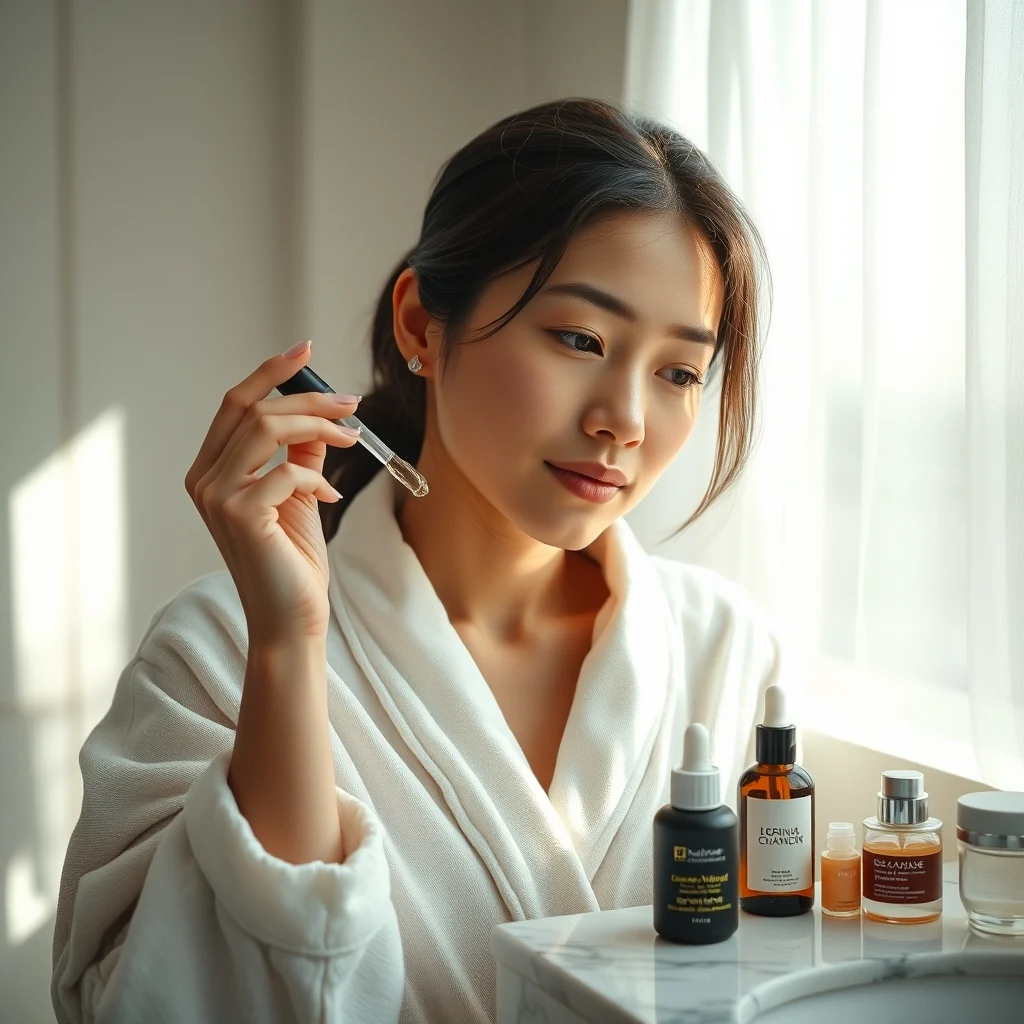
In 2024, the global skincare industry is witnessing a paradigm shift as Korean beauty (K-beauty) principles increasingly intersect with psychological well-being, giving rise to what experts term the Emotional Skin Connection. This movement reframes skincare not merely as a routine of topical applications but as a mindful practice that fosters mental resilience, self-awareness, and emotional balance. The trend has gained traction across East Asia, North America, and Europe, with market analysts reporting a 28% year-over-year increase in consumer demand for products and rituals that emphasize emotional engagement alongside physical results. The phenomenon is driven by a confluence of factors: rising stress levels, the post-pandemic prioritization of self-care, and scientific research linking skin health to emotional states.
At its core, the Emotional Skin Connection posits that skin is not an isolated organ but a dynamic interface between internal emotional states and external environmental stressors. Dermatologists and psychologists alike are documenting how chronic stress, anxiety, and even joy can manifest in skin conditions such as acne, eczema, or premature aging. A 2023 study published in the Journal of Investigative Dermatology found that individuals experiencing high levels of psychological distress were 45% more likely to develop inflammatory skin disorders within a 12-month period. Conversely, those who engaged in mindful skincare practices reported a 32% reduction in perceived stress levels, according to a survey conducted by the American Academy of Dermatology. The movement is not confined to product formulations; it encompasses rituals, language, and even the sensory experience of skincare, transforming it into a meditative act.
The Historical Roots of Mindful Skincare
The Emotional Skin Connection is not a novel concept but rather a revival and modernization of ancient practices. Traditional Korean medicine, which dates back over 2,000 years, has long recognized the interplay between emotional well-being and skin health. The Dongui Bogam, a 17th-century Korean medical text, explicitly links skin conditions to the balance of qi (vital energy) and emotional harmony. Fast-forward to the 21st century, and this philosophy has been repackaged for contemporary audiences through the lens of K-beauty’s preventive and holistic ethos.
- Pre-2000s: Skincare in Korea was largely utilitarian, focused on addressing immediate concerns like dryness or acne. Emotional well-being was a secondary consideration, if at all.
- 2000–2010: The rise of K-beauty’s 10-step routine introduced a more structured approach, but the emphasis remained on physical results. However, brands began incorporating sensory elements like textures and fragrances to enhance user experience.
- 2010–2015: The global expansion of K-beauty brought terms like “glass skin” and “honey skin” into mainstream discourse, shifting the focus toward long-term skin health. Brands like Laneige and Sulwhasoo began marketing products as part of a “ritual” rather than a chore.
- 2016–2020: The slow skincare movement emerged, advocating for fewer products and more intentional application. This period saw the first explicit connections between skincare and mindfulness, with brands like Then I Met You launching campaigns centered on self-love and emotional healing.
- 2021–Present: The Emotional Skin Connection has crystallized into a distinct philosophy, with brands and dermatologists collaborating to create products and routines that address both skin and psyche. The COVID-19 pandemic accelerated this trend, as lockdowns forced consumers to confront the link between their emotional states and skin health.
The Mechanics of Emotional Skincare
The Emotional Skin Connection operates on three interconnected levels: biological, behavioral, and cultural. Biologically, the skin and brain are linked through the hypothalamic-pituitary-adrenal (HPA) axis, a complex network that regulates stress responses. When the brain perceives stress, it triggers the release of cortisol, a hormone that can disrupt the skin’s barrier function, leading to inflammation, dehydration, and sensitivity. Products designed for emotional skincare often contain adaptogens like ashwagandha or reishi mushroom, which are believed to modulate cortisol levels and restore balance.
Behaviorally, the movement encourages users to transform skincare into a mindful ritual. This involves:
- Intentional Application: Slowing down the application process to focus on sensory experiences, such as the texture of a serum or the scent of a moisturizer. A 2022 study by the Journal of Cosmetic Dermatology found that individuals who practiced intentional application reported higher levels of satisfaction and perceived efficacy.
- Journaling: Many brands now include prompts or digital apps to encourage users to document their emotional state alongside their skincare routine. This practice helps individuals identify patterns between their mood and skin condition.
- Breathwork: Some routines incorporate deep breathing exercises during product application, which has been shown to lower cortisol levels and enhance product absorption by improving circulation.
Culturally, the Emotional Skin Connection reflects a broader shift toward viewing self-care as a necessity rather than a luxury. Dr. Elena Kim, a dermatologist and researcher at Seoul National University, explains, “In Korea, skincare has always been a communal activity—something shared between mothers and daughters, friends, or even colleagues. The Emotional Skin Connection formalizes this tradition, turning it into a tool for emotional regulation. It’s not just about looking good; it’s about feeling grounded.”
Quantitative Impact: Data and Market Trends
The Emotional Skin Connection is not just a philosophical shift; it is a lucrative market segment. According to a 2023 report by McKinsey & Company, the global market for “wellness-focused skincare” is projected to reach $27 billion by 2027, with K-beauty brands capturing 35% of the share. The following table highlights key market trends:
| Metric | 2020 | 2023 | Projected 2027 |
|---|---|---|---|
| Global Market Value (USD Billion) | 12.4 | 18.9 | 27.0 |
| Consumer Demand for “Mindful Skincare” (%) | 18 | 42 | 65 |
| Products with Adaptogenic Ingredients (%) | 5 | 22 | 40 |
| Brands Offering Emotional Wellness Content (%) | 10 | 35 | 70 |
Consumer behavior has also evolved. A 2023 survey by NielsenIQ revealed that 68% of skincare consumers now prioritize products that offer an “emotional benefit” over those that deliver only physical results. This shift is particularly pronounced among Gen Z and millennial demographics, who are 2.5 times more likely to purchase skincare products that align with their values, such as sustainability or mental health awareness.
Stakeholder Perspectives: A Multifaceted Debate
The Emotional Skin Connection has sparked diverse reactions from stakeholders across the skincare ecosystem. Proponents argue that it represents a necessary evolution in how society approaches self-care. “Skincare is no longer just about vanity; it’s about survival,” says Dr. Ava Shamban, a board-certified dermatologist and founder of SKIN FIVE. “In a world where stress is the new normal, we need tools that address both the mind and the skin. The Emotional Skin Connection provides that framework.”
However, critics caution against overcommercialization. “There’s a fine line between mindful skincare and capitalizing on mental health struggles,” warns Dr. Jessica Wu, a Los Angeles-based dermatologist and author of Feed Your Face. “Some brands are slapping terms like ’emotional healing’ on products without any scientific backing. Consumers need to be discerning.”
Psychologists, too, offer mixed perspectives. Dr. Sarah Park, a clinical psychologist specializing in body image, notes, “For individuals with a history of anxiety or obsessive-compulsive tendencies, mindful skincare can be a double-edged sword. It can provide structure and comfort, but it can also become another source of stress if taken to an extreme.” She advises consumers to approach the trend with balance, using it as a tool for self-care rather than a rigid routine.
Industry insiders highlight the challenges of scaling the movement. “Creating products that genuinely address emotional well-being requires a deep understanding of both dermatology and psychology,” says Soo-Jin Lee, CEO of Peach & Lily. “It’s not enough to add a lavender scent and call it a day. Brands need to invest in research and education to deliver real value.”
Regulatory and Ethical Considerations
The rise of the Emotional Skin Connection has also raised questions about regulation and ethics. Currently, there are no standardized guidelines for marketing skincare products with emotional or psychological benefits. The U.S. Food and Drug Administration (FDA) and the European Commission classify skincare products as cosmetics, which means they are not subject to the same rigorous testing as pharmaceuticals. This regulatory gap has led to concerns about false advertising and the potential for products to exploit vulnerable consumers.
In response, some brands are taking proactive steps. Dr. Jart+, for example, has partnered with the International Society of Dermatology to develop a certification program for “emotionally intelligent skincare.” The program evaluates products based on their ingredients, sensory experience, and the scientific validity of their emotional claims. “Transparency is key,” says Dr. Jart+’s chief scientific officer, Dr. Sung-Jae Lee. “Consumers deserve to know what they’re putting on their skin and how it’s supposed to make them feel.”
The Future of Emotional Skincare
As the Emotional Skin Connection continues to gain momentum, several key developments are on the horizon. In 2025, the Korean Ministry of Food and Drug Safety (MFDS) is expected to release updated guidelines for skincare products marketed with emotional or psychological benefits. These guidelines will likely include requirements for clinical testing and clear labeling of active ingredients.
Technological advancements are also poised to play a significant role. Artificial intelligence (AI) and machine learning are being integrated into skincare apps to provide personalized emotional wellness recommendations. For example, L’Oréal’s ModiFace technology now includes a feature that analyzes users’ facial expressions to gauge their emotional state and suggest corresponding skincare routines or mindfulness exercises.
Moreover, the movement is expanding beyond individual self-care to encompass community and social justice. Brands like Glow Recipe and Hero Cosmetics are launching initiatives to address the emotional toll of skin conditions like acne or eczema, which can lead to social stigma and low self-esteem. “Skincare is inherently tied to identity,” says Sarah Lee, co-founder of Glow Recipe. “By addressing the emotional aspects, we’re not just selling products; we’re fostering a more inclusive and compassionate beauty culture.”
The Emotional Skin Connection challenges the notion that skincare is a superficial pursuit. By integrating mindful practices, scientific research, and cultural traditions, it offers a holistic approach to well-being that resonates with a generation seeking meaning beyond material success. As the movement evolves, its success will depend on the industry’s ability to balance innovation with integrity, ensuring that emotional skincare remains a tool for empowerment rather than exploitation. The conversation is far from over, but one thing is clear: the future of skincare is as much about how it makes you feel as how it makes you look.
You may also like
-
The Comprehensive Dynamics of the Glass Skin Routine: Korea’s Luminous Skincare Philosophy and Its Global Scientific Validation
-
The Layered Logic of Korean Skincare: A Systematic Breakdown of Customization, Hydration, and Skin-Specific Radiance Strategies
-
K-Beauty’s Gentle Barrier Protection: A Multidimensional Framework for Skin Resilience and Long-Term Health
-
The Strategic Evolution of the Seven Skin Method: Korea’s Layered Hydration Revolution and Its Scientific Foundations in Modern Skincare
-
Seoul’s K-Beauty Frontier: A Comprehensive Analysis of the Micro Spicule Tech Trend and Its Scientific, Cultural, and Market Implications