
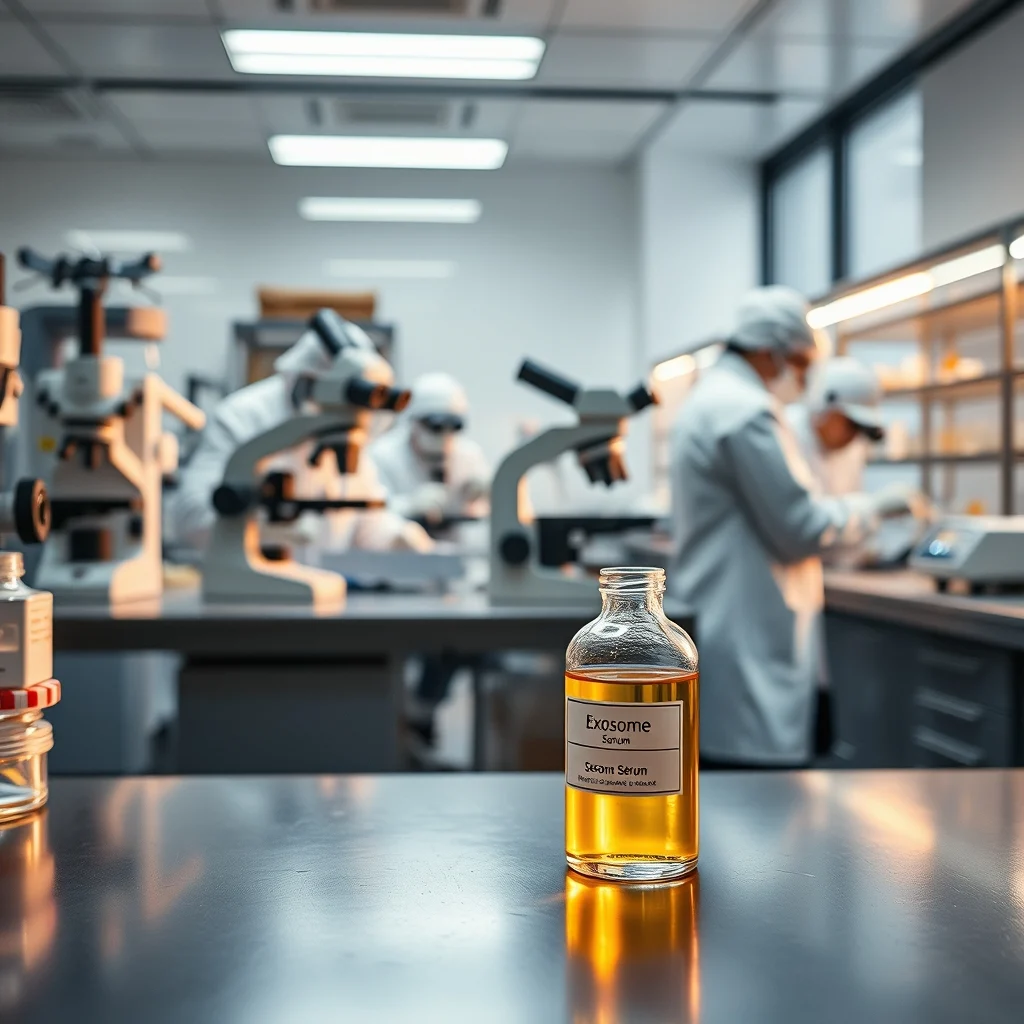
Seoul’s skincare industry is undergoing a paradigm shift as exosome technology emerges as the next frontier in regenerative beauty. Over the past 24 months, exosome-based products have transitioned from niche clinical treatments to mainstream consumer offerings, with South Korea’s domestic market projected to exceed $350 million by 2025, according to a 2024 report by the Korea Health Industry Development Institute (KHIDI). This surge reflects a convergence of biotechnological innovation, consumer demand for non-invasive anti-aging solutions, and the global expansion of K-beauty’s influence. The trend is particularly pronounced in Seoul’s aesthetic clinics and premium skincare brands, where exosomes—extracellular vesicles derived from stem cells—are being harnessed for their ability to accelerate cellular repair, enhance collagen synthesis, and modulate inflammation.
Exosome skincare’s rise is rooted in South Korea’s regulatory environment, which has historically prioritized rapid commercialization of cutting-edge biotech. The Ministry of Food and Drug Safety (MFDS) approved the first exosome-based cosmetic ingredient in 2021, setting a precedent for subsequent product launches. Unlike traditional growth factors or peptides, exosomes operate at a subcellular level, delivering microRNAs and proteins that signal skin cells to regenerate. This mechanism has positioned them as a bridge between clinical dermatology and at-home skincare, appealing to consumers seeking results comparable to professional treatments without invasive procedures. The technology’s adoption has been accelerated by Seoul’s dense network of aesthetic clinics, particularly in Gangnam and Apgujeong, where dermatologists and plastic surgeons have integrated exosome therapies into post-procedural care regimens.
The Scientific Foundation: How Exosomes Redefine Skin Regeneration
Exosomes are nano-sized vesicles secreted by mesenchymal stem cells (MSCs), containing a payload of bioactive molecules that facilitate intercellular communication. In skincare, their primary function is to mimic the body’s natural healing processes by delivering genetic material and proteins to target cells. A 2023 study published in the Journal of Cosmetic Dermatology demonstrated that topical application of exosome-rich conditioned media improved skin elasticity by 32% and reduced wrinkle depth by 28% over 12 weeks, outperforming traditional retinoids in controlled trials. The technology’s efficacy stems from its ability to penetrate the stratum corneum and modulate fibroblast activity, a process that traditional active ingredients like vitamin C or hyaluronic acid cannot replicate.
South Korean biotech firms have pioneered scalable production methods for cosmetic-grade exosomes. Companies such as ExoCoBio and Cellivery Therapeutics have developed proprietary platforms to isolate and stabilize exosomes from human adipose-derived stem cells, ensuring consistency and safety. These firms collaborate with K-beauty brands like Amorepacific and LG Household & Health Care to incorporate exosomes into serums, ampoules, and sheet masks. The manufacturing process involves ultracentrifugation and filtration to purify exosomes, followed by lyophilization to extend shelf life. Regulatory oversight remains a critical factor; the MFDS classifies exosome-based cosmetics as functional ingredients, subjecting them to rigorous stability and efficacy testing before market release.
Market Dynamics: Consumer Demand and Brand Strategies
The commercialization of exosome skincare has been driven by three key consumer segments: aging populations seeking non-surgical rejuvenation, younger demographics prioritizing preventive care, and post-procedural patients requiring accelerated healing. A 2024 survey by McKinsey & Company found that 68% of South Korean women aged 30-50 were willing to pay a premium for exosome-based products, citing their perceived superiority over conventional anti-aging treatments. This demand has prompted K-beauty brands to adopt tiered pricing strategies, with entry-level exosome serums retailing for ₩80,000 ($60) and clinical-grade treatments exceeding ₩500,000 ($375) per session.
Seoul’s skincare brands have leveraged digital marketing to educate consumers about exosome technology. Influencers and dermatologists on platforms like Naver Blog and YouTube have played a pivotal role in demystifying the science, with hashtags such as #ExosomeGlow and #KBeautyRegeneration amassing over 1.2 million posts on Instagram. Brands like Dr. Jart+ and Laneige have partnered with aesthetic clinics to offer bundled treatments, combining exosome facials with laser therapy or microneedling. This synergy between retail and clinical sectors has created a feedback loop, where consumer feedback informs product development, and clinical outcomes validate marketing claims.
Historical Context: From Stem Cells to Exosomes
The evolution of exosome skincare in South Korea can be traced through key milestones:
- 2010-2015: Early research into stem cell-derived conditioned media for wound healing, led by institutions like Seoul National University Hospital. Clinical trials demonstrated accelerated tissue repair, but regulatory hurdles delayed cosmetic applications.
- 2016-2018: The MFDS granted conditional approval for stem cell-derived ingredients in cosmetics, prompting brands like The Face Shop to launch stem cell-based serums. However, concerns over batch variability and ethical sourcing limited market penetration.
- 2019-2021: Exosomes emerged as a viable alternative to whole stem cells, offering targeted delivery without the risks of cell transplantation. The first exosome-based cosmetic, ExoCoBio’s EXO-CSC, received MFDS approval in 2021, marking a turning point for the industry.
- 2022-Present: Rapid commercialization, with over 40 exosome-containing products launched by 2024. Brands like Sulwhasoo and Hera have incorporated exosomes into their premium lines, while startups such as L’Atelier de Paris focus exclusively on exosome-based formulations.
Systemic Impacts: Regulatory, Economic, and Cultural Shifts
Exosome skincare’s ascent has triggered broader systemic changes in South Korea’s beauty industry. Regulatory agencies are grappling with the classification of exosomes, which occupy a gray area between cosmetics and biologics. The MFDS has proposed a new category for “bioactive cosmetics,” which would subject exosome products to stricter pre-market testing. This shift could slow innovation but enhance consumer safety, addressing concerns about unproven claims and counterfeit products.
Economically, the exosome market has attracted significant investment. Venture capital funding for South Korean biotech startups specializing in exosomes reached ₩220 billion ($165 million) in 2023, a 45% increase from the previous year, according to the Korea Venture Capital Association. This influx of capital has fueled R&D, with firms exploring applications beyond skincare, including hair regeneration and scar reduction. The technology’s global potential is underscored by partnerships with international brands; Estée Lauder, for instance, launched an exosome-infused serum in 2024, developed in collaboration with South Korean biotech firm ExoStem.
Culturally, exosome skincare reflects Seoul’s broader obsession with “well-aging” and scientific beauty. Unlike previous trends that emphasized superficial results, exosomes align with a growing consumer preference for treatments that address cellular health. This shift is evident in the language used by brands, which increasingly emphasize terms like “regenerative beauty” and “bio-identical repair.” However, the trend has also sparked debates about accessibility, with critics arguing that exosome products exacerbate socioeconomic disparities in skincare. A 2024 report by the Korea Consumer Agency found that 72% of exosome-based products were priced above ₩100,000 ($75), limiting their reach to affluent consumers.
Stakeholder Perspectives: Conflicting Priorities and Future Trajectories
Dr. Kim Soo-jin, a dermatologist at Gangnam’s ID Hospital and a leading researcher in exosome therapy, emphasizes the technology’s clinical potential: “Exosomes represent a paradigm shift in dermatology. Their ability to modulate inflammation and stimulate collagen production makes them ideal for treating conditions like rosacea and post-inflammatory hyperpigmentation. However, we need long-term studies to fully understand their safety profile, especially for at-home use.”
Industry stakeholders highlight the commercial opportunities. Lee Ji-eun, CEO of ExoCoBio, notes, “The global demand for exosome skincare is growing at an unprecedented rate. Our challenge is to scale production while maintaining quality. We’re investing in AI-driven quality control systems to ensure batch consistency, which is critical for consumer trust.”
Consumer advocates, however, urge caution. Park Min-ji, a researcher at the Korea Consumer Agency, warns, “The rapid commercialization of exosome products has outpaced regulatory oversight. We’ve seen cases of counterfeit products entering the market, which could pose serious health risks. Consumers need to verify product certifications and consult dermatologists before use.”
International regulators are closely monitoring South Korea’s approach. The U.S. Food and Drug Administration (FDA) has yet to approve exosome-based cosmetics, citing the need for more data on long-term safety. A 2024 FDA briefing document stated, “While exosomes show promise, their use in over-the-counter products raises questions about systemic absorption and potential off-target effects. We’re collaborating with global partners to establish standardized testing protocols.”
The future of exosome skincare in Seoul hinges on three variables: regulatory clarity, technological advancements, and consumer education. The MFDS is expected to finalize its “bioactive cosmetics” framework by late 2025, which could either accelerate or stifle innovation depending on its stringency. Meanwhile, biotech firms are exploring synthetic exosomes, which could address ethical concerns about stem cell sourcing and reduce production costs. Consumer education remains a critical hurdle; a 2024 survey by Gallup Korea found that 43% of respondents were unaware of what exosomes were, highlighting the need for clearer communication from brands and regulators. As Seoul’s skincare industry navigates these challenges, exosome technology is poised to redefine the boundaries between clinical and cosmetic beauty, with implications that extend far beyond South Korea’s borders.
You may also like
-
The Comprehensive Dynamics of the Glass Skin Routine: Korea’s Luminous Skincare Philosophy and Its Global Scientific Validation
-
The Layered Logic of Korean Skincare: A Systematic Breakdown of Customization, Hydration, and Skin-Specific Radiance Strategies
-
K-Beauty’s Gentle Barrier Protection: A Multidimensional Framework for Skin Resilience and Long-Term Health
-
The Strategic Evolution of the Seven Skin Method: Korea’s Layered Hydration Revolution and Its Scientific Foundations in Modern Skincare
-
Seoul’s K-Beauty Frontier: A Comprehensive Analysis of the Micro Spicule Tech Trend and Its Scientific, Cultural, and Market Implications