
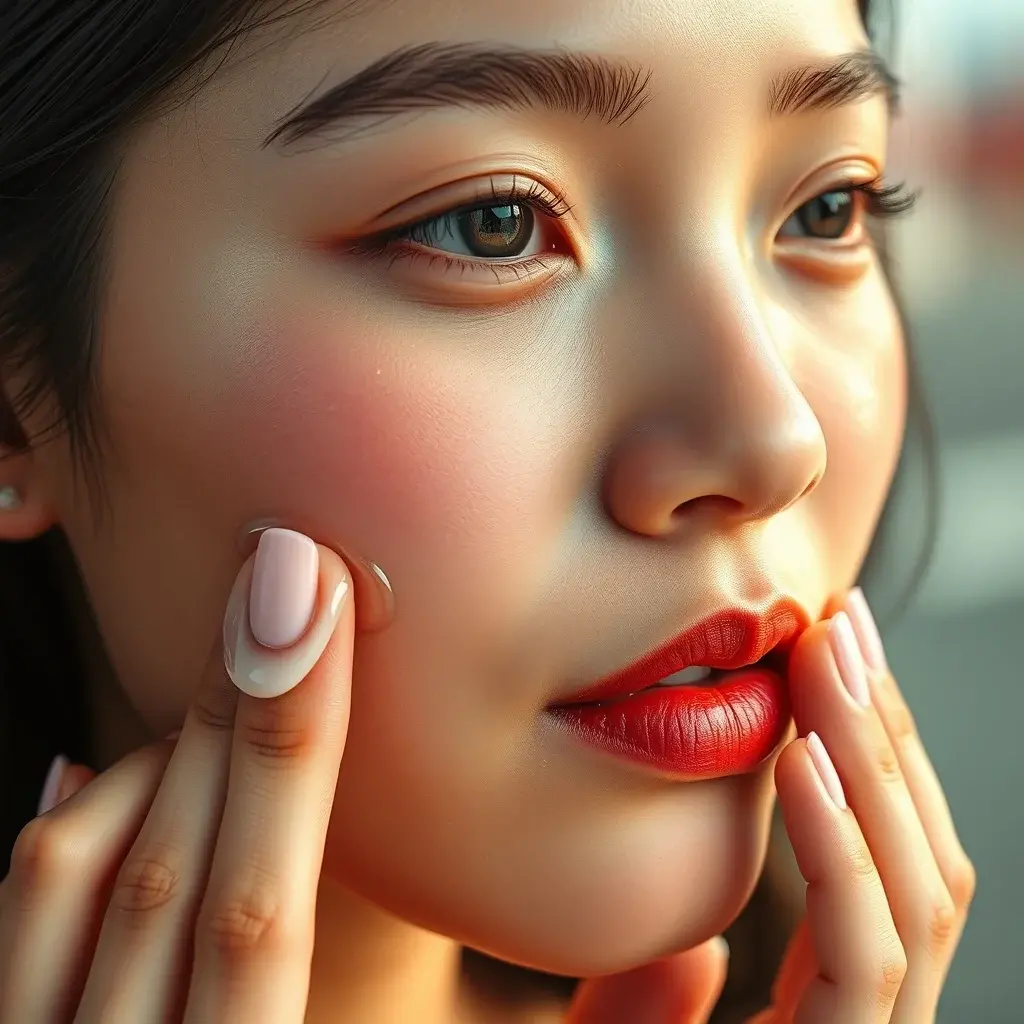
In the ever-evolving landscape of global skincare, few trends have captured the imagination of beauty enthusiasts as swiftly as the Chok Chok Skin phenomenon. Originating from South Korea’s meticulous approach to hydration and luminosity, this trend has redefined modern beauty standards by prioritizing a dewy, bouncy complexion over matte finishes. Unlike traditional Western skincare, which often emphasizes oil control and pore minimization, Chok Chok Skin celebrates moisture retention as the cornerstone of healthy, radiant skin. The movement gained traction in 2018, coinciding with the rise of K-beauty’s influence in Western markets, and has since become a staple in routines worldwide. Its appeal lies not only in its visible results but also in its adaptability to diverse skin types and climates, making it a versatile solution for those seeking a natural, hydrated glow.
The Chok Chok Skin trend is more than a fleeting fad; it represents a paradigm shift in skincare philosophy. Rooted in Korea’s cultural emphasis on preventive care and long-term skin health, the method leverages a combination of humectants, emollients, and occlusives to achieve its signature plumpness. Key stakeholders in this movement include global beauty conglomerates like Amorepacific and LG Household & Health Care, independent K-beauty brands such as COSRX and Laneige, and dermatologists who endorse its science-backed approach. Social media platforms, particularly Instagram and TikTok, have played a pivotal role in amplifying its reach, with hashtags like #ChokChokSkin amassing over 500,000 posts as of 2023. The trend’s rapid adoption underscores a broader consumer shift toward skincare routines that prioritize hydration and skin barrier repair over aggressive exfoliation or drying treatments.
The Historical Context: From Traditional Korean Beauty to Modern Innovation
The foundations of Chok Chok Skin can be traced back to Korea’s centuries-old beauty traditions, where natural ingredients like rice water, ginseng, and green tea were used to maintain skin vitality. However, the modern iteration of the trend emerged in the early 2010s, as K-beauty brands began refining their formulations to address the growing demand for hydration-centric products. The term “Chok Chok” itself, which translates to “moist and bouncy,” was popularized by beauty influencers and skincare experts who sought to distinguish it from the “glass skin” trend, which focuses on a translucent, poreless finish.
A timeline of key milestones highlights the trend’s evolution:
- 2012: The launch of Laneige’s Water Sleeping Mask, one of the first products to emphasize overnight hydration as a skincare strategy.
- 2015: The introduction of COSRX’s Advanced Snail 96 Mucin Power Essence, which demonstrated the efficacy of snail mucin in achieving Chok Chok Skin.
- 2018: The viral success of the “7 Skin Method,” a layering technique that became synonymous with the trend’s hydration-focused ethos.
- 2020: The global expansion of K-beauty brands into Western markets, with Chok Chok Skin products becoming bestsellers on platforms like Sephora and YesStyle.
- 2023: The rise of hybrid products, such as water creams and hydrogel masks, designed to deliver intense hydration with minimal effort.
This progression reflects a broader industry shift toward simplicity and efficacy, as consumers increasingly favor multi-functional products that align with the Chok Chok Skin philosophy.
The Science Behind the Trend: How Hydration Transforms Skin
At its core, Chok Chok Skin relies on a deep understanding of skin physiology and the role of hydration in maintaining its structural integrity. The skin’s outermost layer, the stratum corneum, acts as a barrier to prevent water loss and protect against environmental aggressors. When this barrier is compromised—due to factors like harsh weather, over-exfoliation, or aging—the skin becomes prone to dryness, irritation, and dullness. The Chok Chok Skin method addresses these issues by employing a three-pronged approach: attracting moisture, retaining it, and sealing it in.
Humectants like hyaluronic acid and glycerin draw water into the skin from the environment and deeper layers, while emollients such as squalane and ceramides soften and smooth the skin’s surface. Occlusives like beeswax or dimethicone form a protective layer to prevent moisture evaporation. This combination not only enhances the skin’s immediate appearance but also supports its long-term health by reinforcing the moisture barrier.
Dr. Sarah Lee, a dermatologist based in Seoul, explains the trend’s scientific appeal: “Chok Chok Skin isn’t just about superficial hydration; it’s about restoring the skin’s natural functions. When the moisture barrier is intact, the skin is better equipped to defend itself against pollutants, UV damage, and even acne-causing bacteria. This is why we’re seeing such widespread adoption—it’s a preventive approach that delivers both immediate and long-term benefits.“
Quantitative Data: Market Growth and Consumer Adoption
The Chok Chok Skin trend has had a measurable impact on the global skincare market, with data revealing its influence on consumer behavior and industry innovation. According to a 2023 report by Statista, the global K-beauty market is projected to reach $21.8 billion by 2027, with hydration-focused products accounting for nearly 30% of sales. A survey conducted by the K-Beauty Global Research Institute in 2022 found that 68% of respondents in the U.S. and Europe had incorporated at least one Chok Chok Skin-related product into their routine, citing improved skin texture and reduced redness as primary benefits.
The following table highlights key statistics related to the trend’s market penetration:
| Metric | 2020 | 2023 | Projected 2025 |
|---|---|---|---|
| Global sales of hydration-focused K-beauty products (USD billions) | 4.2 | 6.8 | 9.1 |
| Percentage of K-beauty consumers prioritizing hydration | 52% | 71% | 80% |
| Average number of hydration products in a K-beauty routine | 2.1 | 3.4 | 4.0 |
| Social media mentions of #ChokChokSkin (millions) | 0.3 | 1.2 | 2.5 |
These figures underscore the trend’s growing prominence, particularly among younger consumers who prioritize skincare as a form of self-care. A 2023 study by McKinsey & Company found that Gen Z and Millennial consumers are 2.5 times more likely to purchase K-beauty products than older generations, with hydration and sustainability being key drivers of their purchasing decisions.
Systemic Impacts: How Chok Chok Skin Is Reshaping the Beauty Industry
The rise of Chok Chok Skin has had far-reaching implications for the beauty industry, influencing product development, marketing strategies, and even regulatory standards. Brands outside of Korea, including Western giants like Estée Lauder and L’Oréal, have launched their own hydration-focused lines in response to the trend’s popularity. This cross-pollination of ideas has led to innovations such as hybrid moisturizers that combine the benefits of water creams and traditional balms, catering to consumers who seek both efficacy and convenience.
However, the trend has also sparked debates about sustainability and ingredient transparency. As demand for Chok Chok Skin products grows, so does scrutiny over their environmental impact. A 2022 report by the Environmental Working Group (EWG) highlighted that 40% of K-beauty products marketed for hydration contain microplastics or non-recyclable packaging, raising concerns among eco-conscious consumers. In response, brands like Innisfree and The Face Shop have introduced refillable packaging and biodegradable sheet masks, setting new industry benchmarks for sustainability.
Dr. Min-Jae Park, a cosmetic chemist and founder of a Seoul-based skincare lab, notes the dual-edged nature of the trend: “Chok Chok Skin has undeniably pushed the industry toward more innovative, hydration-focused formulations. But it has also exposed gaps in sustainability practices. The challenge now is to maintain the trend’s core benefits while addressing these environmental concerns. Brands that succeed in doing so will lead the next wave of K-beauty innovation.“
Competing Stakeholder Perspectives: Balancing Efficacy, Accessibility, and Ethics
The Chok Chok Skin phenomenon has elicited diverse reactions from stakeholders across the beauty ecosystem. For dermatologists, the trend represents a welcome shift toward science-backed skincare. Dr. Emily Chen, a board-certified dermatologist in Los Angeles, emphasizes its clinical benefits: “From a medical standpoint, the emphasis on hydration and barrier repair aligns perfectly with what we know about skin health. Patients who adopt these principles often see improvements in conditions like eczema and rosacea, which are exacerbated by dryness and irritation.“
Conversely, some industry analysts caution against the trend’s potential to oversimplify skincare. A 2023 article in Cosmetics Business argued that the Chok Chok Skin narrative risks alienating consumers with oily or acne-prone skin, who may perceive hydration as incompatible with their needs. The article cited a survey in which 28% of respondents with oily skin reported feeling excluded by the trend’s marketing, which often features models with visibly dewy complexions.
Consumer advocates, meanwhile, have raised concerns about the trend’s affordability. While K-beauty is often associated with accessible price points, premium Chok Chok Skin products—such as those containing rare botanicals or patented delivery systems—can cost upwards of $100. This has led to calls for greater transparency in pricing and ingredient sourcing, particularly as the trend expands into emerging markets.
Jisoo Kim, a beauty influencer and founder of a K-beauty review platform, offers a nuanced perspective: “Chok Chok Skin has democratized skincare in many ways, but it’s not a one-size-fits-all solution. The key is education—helping consumers understand how to adapt the trend to their unique skin needs. For some, that might mean using a lightweight water cream; for others, it could involve layering a snail mucin essence with a heavier balm. The trend’s flexibility is its greatest strength.“
Pending Variables and Future Trajectories
The future of the Chok Chok Skin trend hinges on several pending variables, including regulatory developments, technological advancements, and shifting consumer preferences. In 2024, South Korea’s Ministry of Food and Drug Safety is set to implement stricter guidelines for hydration-related marketing claims, requiring brands to substantiate their efficacy with clinical data. This move could weed out lower-quality products but may also increase costs for smaller brands, potentially limiting market diversity.
Technological innovations, such as AI-driven skincare diagnostics and personalized hydration algorithms, are poised to further refine the trend. Companies like Atolla and Curology are already leveraging machine learning to tailor Chok Chok Skin routines to individual skin types, a trend that is expected to gain traction as consumers seek more customized solutions. Additionally, the growing interest in “skin flooding”—a technique that involves layering multiple hydrating products to achieve an ultra-dewy finish—suggests that the trend’s core principles will continue to evolve.
Market catalysts, such as the expansion of K-beauty into the Middle East and Africa, could also shape the trend’s trajectory. These regions, with their hot, arid climates, present unique challenges and opportunities for hydration-focused skincare. Brands that successfully adapt their formulations to local conditions—such as by incorporating cooling agents or UV-protective ingredients—may unlock new growth avenues. As the beauty industry grapples with these dynamics, one thing remains clear: the Chok Chok Skin phenomenon is far from reaching its peak, and its influence will continue to ripple across global skincare for years to come.
For those looking to incorporate the trend into their routine, the key lies in experimentation and consistency. Start with a hydrating toner or essence, followed by a lightweight serum, and seal it all in with a water cream or gel moisturizer. Listen to your skin’s needs, adjust as necessary, and let the journey toward Chok Chok Skin unfold naturally.
You may also like
-
The Comprehensive Dynamics of the Glass Skin Routine: Korea’s Luminous Skincare Philosophy and Its Global Scientific Validation
-
The Layered Logic of Korean Skincare: A Systematic Breakdown of Customization, Hydration, and Skin-Specific Radiance Strategies
-
K-Beauty’s Gentle Barrier Protection: A Multidimensional Framework for Skin Resilience and Long-Term Health
-
The Strategic Evolution of the Seven Skin Method: Korea’s Layered Hydration Revolution and Its Scientific Foundations in Modern Skincare
-
Seoul’s K-Beauty Frontier: A Comprehensive Analysis of the Micro Spicule Tech Trend and Its Scientific, Cultural, and Market Implications