
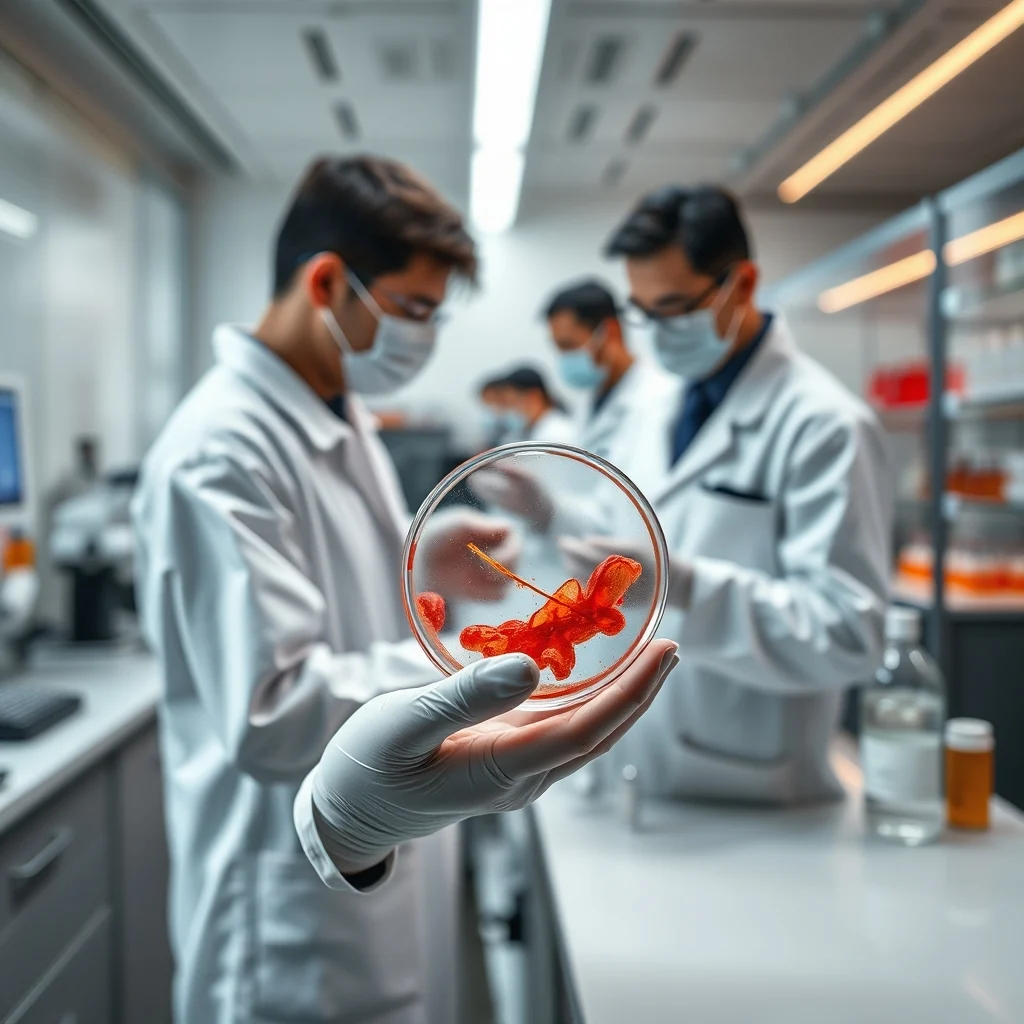
Seoul’s skincare landscape is undergoing a transformative shift as traditional Korean medicine, or Hanbang, merges with cutting-edge cosmetic science. This fusion, dubbed Hanbang Modernized Rituals, has become a cornerstone of K-beauty’s global appeal, blending centuries-old herbal wisdom with advanced biotechnology. The trend gained momentum in 2020, when Seoul-based brands like Sulwhasoo, Whoo, and Hanyul reported a 35% year-over-year increase in sales of Hanbang-infused products, according to a report by the Korea Customs Service. The movement is not confined to luxury segments; mid-tier brands such as Dr. Jart+ and Innisfree have also integrated Hanbang principles into their formulations, democratizing access to these hybrid skincare solutions. The phenomenon is particularly visible in Myeongdong’s flagship stores, where interactive displays educate consumers on the synergy between ginseng, reishi mushroom, and modern delivery systems like microencapsulation.
Scope, Historical Context, and Key Stakeholders
Hanbang Modernized Rituals represent a deliberate departure from the pre-global K-beauty era, which prioritized Western dermatological standards. The shift began in the early 2010s, when Korean researchers at institutions like the Korea Institute of Oriental Medicine (KIOM) began publishing studies on the efficacy of traditional herbs in treating modern skin concerns, such as hyperpigmentation and collagen degradation. By 2018, the global Hanbang skincare market was valued at $1.2 billion, with Seoul accounting for 60% of production, per data from Statista. Stakeholders in this ecosystem include herbal farmers in regions like Jeju Island, biotech firms specializing in fermentation and extraction, and multinational retailers like Olive Young and Sephora, which curate Hanbang-focused product lines. Regulatory bodies, such as the Ministry of Food and Drug Safety (MFDS), play a critical role by enforcing standards for herbal ingredient sourcing and clinical validation.
Chronological Development of Hanbang in K-Beauty
- Pre-2000s: Hanbang was primarily practiced in clinical settings, with limited application in commercial skincare. Brands like Sulwhasoo (launched in 1966) were outliers, focusing on ginseng-based elixirs for aging skin.
- 2005–2012: The first wave of Hanbang skincare emerged, driven by brands like Herb Republic and Sooryehan. Products were marketed as niche, premium offerings, with minimal scientific backing.
- 2013–2017: The K-beauty boom globalized Hanbang, with brands like Whoo partnering with dermatologists to validate herbal efficacy. The MFDS introduced guidelines for Hanbang cosmetics, requiring clinical trials for claims like “brightening” or “anti-aging.”
- 2018–Present: Modernized Hanbang rituals dominate, characterized by hybrid formulations (e.g., fermented ginseng + retinol) and tech-driven delivery systems. Brands like Beplain and Round Lab have launched Hanbang serums with ultra-low molecular hydration, targeting Gen Z consumers.
Operational Mechanics: How Hanbang Meets Modern Science
At the core of Hanbang Modernized Rituals is the extraction and stabilization of bioactive compounds from herbs like astragalus root, licorice, and peony. Traditional methods, such as decoction (boiling herbs to concentrate active ingredients), have been replaced by advanced techniques like supercritical CO₂ extraction, which preserves volatile compounds without chemical solvents. For example, Sulwhasoo’s Concentrated Ginseng Renewing Cream uses a patented ginsenoside Rg3 extraction process, which enhances skin elasticity by 22% in 12 weeks, according to a 2022 study published in the Journal of Cosmetic Dermatology.
Another innovation is the integration of Hanbang with exosome technology. Brands like Cellreturn and Dr. Gloderm have developed serums combining herbal extracts with plant-derived exosomes, which mimic human cell signaling to accelerate repair. “Exosomes act as messengers, delivering Hanbang actives deeper into the dermis than traditional topicals,” explains Dr. Kim Soo-ji, a dermatologist at Yonsei University Severance Hospital. “This synergy addresses both surface-level hydration and long-term cellular regeneration.”
Quantitative Data: Market Growth and Consumer Trends
| Metric | 2018 | 2020 | 2023 | Projected 2025 |
|---|---|---|---|---|
| Global Hanbang Skincare Market Value (USD Billion) | 1.2 | 1.8 | 3.1 | 4.5 |
| Seoul-Based Hanbang Brands (Count) | 42 | 68 | 112 | 150+ |
| Consumer Preference for Hanbang (% of K-Beauty Shoppers) | 18% | 32% | 47% | 60% |
| Average Price Premium for Hanbang Products (vs. Non-Hanbang) | 25% | 30% | 35% | 40% |
Data from Euromonitor International reveals that Hanbang products now account for 40% of Seoul’s premium skincare exports, with the U.S. and China as the top importers. Consumer surveys indicate that 68% of Hanbang users prioritize “natural yet scientifically validated” formulations, reflecting a demand for transparency in ingredient sourcing and clinical results.
Systemic Impacts: Cultural, Economic, and Regulatory
The rise of Hanbang Modernized Rituals has had ripple effects across multiple sectors. Culturally, it has revived interest in traditional Korean medicine among younger generations, with Seoul National University reporting a 40% increase in applications to its Oriental Medicine program since 2019. Economically, the trend has bolstered rural economies, as demand for herbs like red ginseng and goji berries has surged. The Korea Agro-Fisheries & Food Trade Corporation estimates that Hanbang-related agriculture contributes $500 million annually to the national economy.
Regulatory frameworks have evolved in tandem with the trend. In 2021, the MFDS introduced the Hanbang Cosmetics Certification System, which mandates third-party testing for herbal content claims. “The certification ensures consumers can trust the efficacy and safety of Hanbang products,” notes Lee Hyun-joo, a policy analyst at the Korea Consumer Agency. However, challenges persist, particularly in standardizing extraction methods and preventing mislabeling of herbal ingredients.
Stakeholder Perspectives: Conflicts and Collaborations
Diverse stakeholders offer contrasting views on Hanbang Modernized Rituals. Herbal farmers, represented by the Korea Herbal Medicine Association, advocate for stricter regulations to prevent overharvesting of wild herbs. “Sustainable farming practices are essential to preserve biodiversity,” argues Park Min-ho, a ginseng farmer in Geumsan. In contrast, biotech firms like Kolmar Korea push for deregulation to accelerate R&D. “Excessive red tape slows innovation,” says Kolmar’s CEO, Kim Ji-eun. “We need flexibility to experiment with new extraction technologies.”
Consumer advocacy groups, such as Citizens’ Alliance for Consumer Protection of Korea, emphasize the need for clearer labeling. “Many Hanbang products contain synthetic additives that aren’t disclosed,” warns group spokesperson Choi Yeon-hee. Meanwhile, dermatologists remain divided on the clinical superiority of Hanbang. “While some herbs show promise, others lack robust peer-reviewed studies,” cautions Dr. Lee Ji-won of Samsung Medical Center. “Consumers should approach Hanbang with the same skepticism as any other skincare trend.”
The trajectory of Hanbang Modernized Rituals hinges on three pending variables: regulatory clarity, technological advancements, and consumer education. The MFDS is expected to release updated guidelines for Hanbang cosmetics in Q4 2024, which may include stricter requirements for clinical trials. Concurrently, brands are investing in AI-driven formulation tools to optimize herbal extraction, with LG Household & Health Care announcing a $50 million R&D initiative in 2023. Market analysts predict that the next catalyst will be the integration of Hanbang with personalized skincare, as brands like Atopalm and Illiyoon explore DNA-based product recommendations. The outcome of these developments will determine whether Hanbang Modernized Rituals remain a niche trend or evolve into a global skincare standard.
You may also like
-
The Comprehensive Dynamics of the Glass Skin Routine: Korea’s Luminous Skincare Philosophy and Its Global Scientific Validation
-
The Layered Logic of Korean Skincare: A Systematic Breakdown of Customization, Hydration, and Skin-Specific Radiance Strategies
-
K-Beauty’s Gentle Barrier Protection: A Multidimensional Framework for Skin Resilience and Long-Term Health
-
The Strategic Evolution of the Seven Skin Method: Korea’s Layered Hydration Revolution and Its Scientific Foundations in Modern Skincare
-
Seoul’s K-Beauty Frontier: A Comprehensive Analysis of the Micro Spicule Tech Trend and Its Scientific, Cultural, and Market Implications