
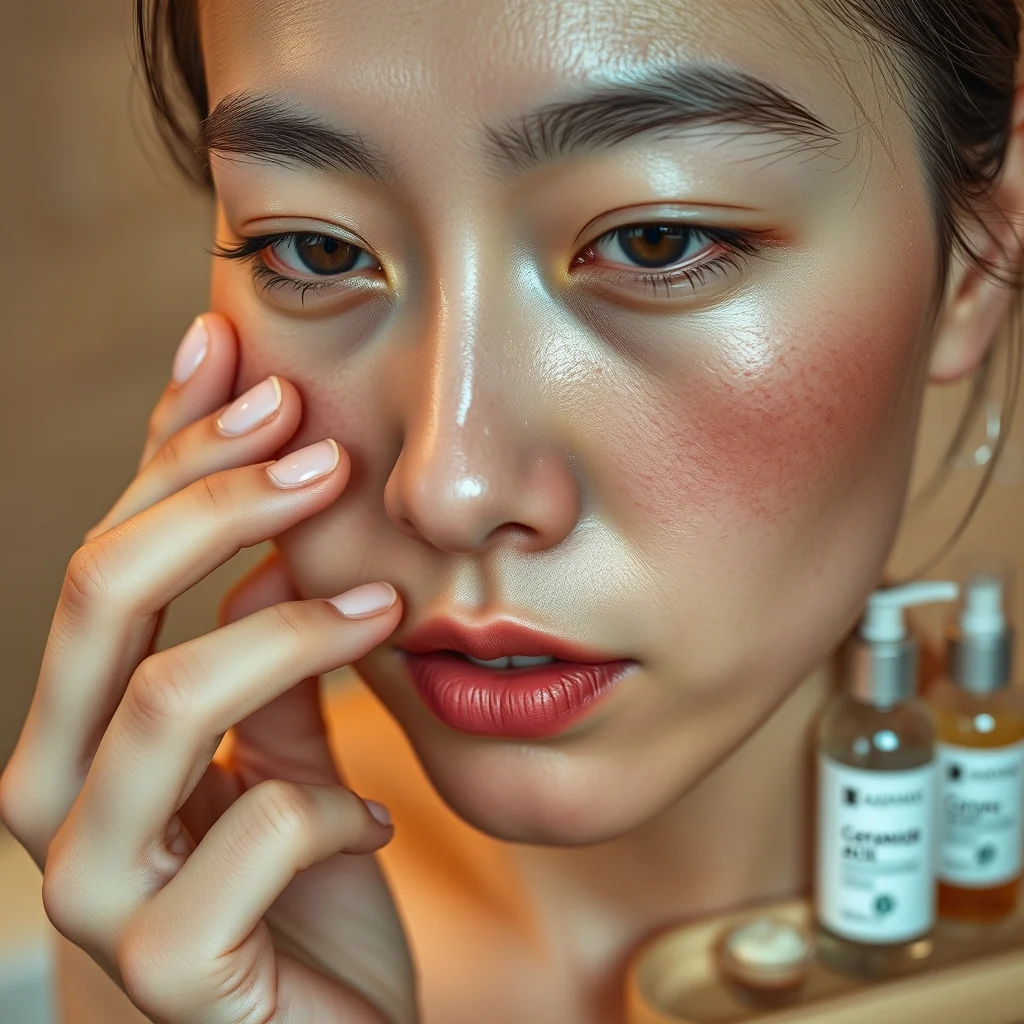
If your skin feels tight, flaky, or easily irritated, you’re not alone—dry and sensitive skin types often struggle to find products that soothe without causing redness or discomfort. The good news? Korean skincare ingredients are designed with gentle, barrier-repairing actives that prioritize hydration and protection. Unlike harsh treatments that strip the skin, these ingredients work harmoniously to restore balance, leaving your complexion calm, plump, and resilient. Ready to transform your routine? Let’s explore the best ingredients tailored for your skin’s needs.
Why Barrier Repair Is Non-Negotiable for Dry & Sensitive Skin
Your skin’s barrier acts like a shield, locking in moisture and keeping irritants out. When it’s compromised—whether from over-exfoliation, environmental stressors, or harsh products—dryness, redness, and sensitivity follow. Korean skincare tackles this by focusing on ingredients that mimic the skin’s natural lipids, such as ceramides and cholesterol. These components help rebuild the barrier, reducing transepidermal water loss (TEWL) and preventing flare-ups.
Think of it as reinforcing a leaky roof. Without a strong barrier, even the gentlest products can feel like sandpaper. That’s why starting with barrier-supporting ingredients isn’t just beneficial—it’s essential for long-term skin health.
Hydration Heroes: Ingredients That Quench Without Irritation
Hyaluronic acid is a staple in Korean skincare, but for dry and sensitive skin, not all forms are created equal. Low-molecular-weight hyaluronic acid penetrates deeper, delivering hydration where it’s needed most, while high-molecular-weight versions sit on the surface to prevent moisture loss. Pair it with glycerin, a humectant that draws water into the skin, and you’ve got a hydration powerhouse that won’t clog pores or cause breakouts.
Another underrated gem? Panthenol (provitamin B5). It soothes irritation, reduces redness, and strengthens the skin’s barrier over time. Unlike alcohol-based toners that can exacerbate dryness, panthenol-infused products leave skin soft and supple without the sting.
The Soothing Squad: Calming Redness and Inflammation
Centella asiatica, also known as cica, is a superstar for sensitive skin. Its anti-inflammatory properties help calm redness and accelerate healing, making it ideal for reactive or eczema-prone complexions. Look for products where cica is paired with madecassoside, a compound that boosts collagen production while soothing irritation.
For those who react to fragrances or essential oils, beta-glucan is a gentler alternative. Derived from oats or mushrooms, it reduces inflammation and enhances the skin’s natural defense mechanisms. It’s especially effective in serums or moisturizers applied after cleansing, when the skin is most vulnerable.
Lipid-Rich Moisturizers: Locking in Hydration for the Long Haul
Dry skin craves lipids—fats that mimic the skin’s natural sebum. Korean moisturizers often feature shea butter, squalane, and jojoba oil, which provide a protective seal without feeling greasy. Squalane, in particular, is a lightweight emollient that mimics the skin’s own oils, making it perfect for those who dislike heavy creams but still need intense hydration.
Ceramide-based moisturizers are another game-changer. They replenish the skin’s lipid barrier, preventing moisture loss and shielding against environmental aggressors. If your skin feels tight after washing, a ceramide-rich cream can restore comfort and elasticity in minutes.
Exfoliation Without the Burn: Gentle Ways to Renew Your Skin
Exfoliation is tricky for dry and sensitive skin, but skipping it entirely can lead to dullness and clogged pores. The key? Lactic acid, a gentle alpha-hydroxy acid (AHA) that dissolves dead skin cells without disrupting the barrier. Unlike glycolic acid, which can be too harsh, lactic acid also has humectant properties, meaning it hydrates while it exfoliates.
For a no-fuss option, try enzyme exfoliants like papaya or pineapple extracts. These break down dead skin cells without scrubbing, making them ideal for reactive skin. Use them once or twice a week, and always follow with a hydrating serum to replenish moisture.
Layering Like a Pro: How to Build a Routine That Works
Korean skincare is all about layering, but for dry and sensitive skin, the order matters. Start with a hydrating toner to prep the skin, followed by a soothing serum (like cica or panthenol). Next, apply a lipid-rich moisturizer to seal everything in. If you’re using an exfoliant, save it for nighttime and always follow with a barrier-repairing cream.
Don’t forget sun protection! Even if your skin is dry, UV rays can worsen sensitivity and accelerate aging. Opt for a mineral sunscreen with zinc oxide or titanium dioxide—these ingredients are less likely to irritate than chemical filters. Apply it as the final step in your morning routine, and reapply every two hours if you’re outdoors.
Your skin doesn’t have to feel like a battleground. By focusing on Korean skincare ingredients that prioritize barrier repair and hydration, you can achieve a calm, glowing complexion without the guesswork. Start with one or two products, observe how your skin responds, and adjust as needed. The goal isn’t perfection—it’s skin that feels comfortable, balanced, and resilient every day. Why not give your skin the gentle care it deserves this week?
You may also like
-
Korean Skincare Ingredients Explained: A Peptide & Regenerative Actives Deep Dive
-
Korean Skincare Ingredients Explained: A Barrier-First, Skinimalism Approach
-
Korean Skincare Ingredients Explained: A Beginner’s Guide to Glass Skin 2.0
-
Korean Skincare Ingredients Explained: A Step-by-Step Guide for Beginners
-
Korean Skincare Ingredients Explained: A Budget-Friendly Guide to Healthy Skin